Invasive Species – Vol. 8 No. 1
In this edition of Natural Inquirer, you will learn about several different invasive species. Invasive species are plants, animals, or organisms that are not native
Read more +$0.00
Highlights
- 7 Articles
- 7 Activities
- 20 Scientists
- Glossary
- Lesson Plan
-
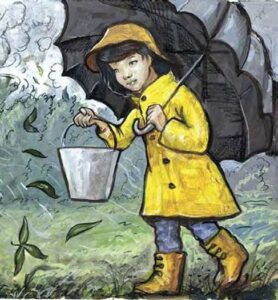
Sudden oak death is a new disease of trees and plants in the United States and Europe. Although scientists are not certain, they believe the fungus-like organism that causes sudden oak death was brought...Moving Spore-adically: The Spread of Sudden Oak Death in California Forests
Sudden oak death is a new disease of trees and plants in the United States and Europe. Although scientists are not certain, they believe the fungus-like organism that causes sudden oak death was brought... -
The nun moth is a major pest of conifers and an occasional pest of broadleaf trees in Europe and Asia. The scientist in this study wanted to discover which trees...And Then There Were Nun: Trees That Could Be Endangered by a Nun Moth Invasion
The nun moth is a major pest of conifers and an occasional pest of broadleaf trees in Europe and Asia. The scientist in this study wanted to discover which trees... -
The scientists were interested in discovering whether the Pacific tree frog population might also be affected by the presence of nonnative trout, similar to the way these trout had affected...Knocked Out By Trout: The Relationship Between Nonnative Trout and Pacific Tree Frogs
The scientists were interested in discovering whether the Pacific tree frog population might also be affected by the presence of nonnative trout, similar to the way these trout had affected... -
The pine shoot beetle is an invasive species in the Great Lakes region of the United States. The pine shoot beetle was brought to the United States from Europe, Asia, and northern Africa. The...Shoot! Foiled Again! Using Chemicals to Discourage the Pine Shoot Beetle
The pine shoot beetle is an invasive species in the Great Lakes region of the United States. The pine shoot beetle was brought to the United States from Europe, Asia, and northern Africa. The... -
The Asian long-horned beetle is an insect pest that was discovered in New York in 1996 and Chicago in 1998. It arrived in the United States on wood packing material that was being used...Tag, You’re It! Using Harmonic Radar to Track the Flight of Beetles
The Asian long-horned beetle is an insect pest that was discovered in New York in 1996 and Chicago in 1998. It arrived in the United States on wood packing material that was being used... -
The Oriental bittersweet is a vine that was transported to the United States from Asia in 1860. Oriental bittersweet escaped from gardens and has spread into natural areas where it is not native. When...Hurry Up and Wait: Investigating an Unusual Strategy for Invasion
The Oriental bittersweet is a vine that was transported to the United States from Asia in 1860. Oriental bittersweet escaped from gardens and has spread into natural areas where it is not native. When... -
In the Western United States, spotted knapweed is one of the most widely found nonnative plants. Spotted knapweed was brought to the United States from Eastern Europe in the early 1900s. To control the...Goll-ly! Don’t Take a Knapweed! The Impact of Nonnative Plants and Animals on Deer Mice
In the Western United States, spotted knapweed is one of the most widely found nonnative plants. Spotted knapweed was brought to the United States from Eastern Europe in the early 1900s. To control the...
-

Invasive Species Edition - Who or What Am I?
Glossary
View All GlossaryClassroom Review Board
Tom Grudowski’s 6th Grade Science Class
- Oconee County Middle School
- Watkinsville, GA
Editorial Review Board Comments
-
Stephen Burke
In the 1980s, I created a special chemical in a chemistry lab. This was a powerful pheromone that is a very strong attractant for a particular species of beetle. This...View Profile -
Jennifer Davidson
My most exciting moment as a scientist came while walking in the forest in the rain, collecting bay laurel leaves infected by sudden oak death and quickly taking them to...View Profile -
Peter De Groot
My favorite science experience is working outdoors to set up and run my experiments so that I can discover new facts about trees and forest insects.View Profile -
Kristen Falk
This past winter I was collecting data in the woods. I was putting data into the computer from a weather station. When I’m in the woods, I hear all kinds...View Profile -
Cathryn Greenberg
My favorite science experience is learning how animals need plants for food and habitat and how many plants also need animals to disperse their seeds to new places.View Profile -
Robert Haack
My favorite science experience happened in ancient history (1975-1978) when I was working as a forester in the Peace Corps in Guatemala in Central America. There was a massive outbreak...View Profile -
Melody Keena
I enjoy science because I get to discover things and solve mysteries just like a detective or crime scene investigator. The insects I work with come into this country hiding...View Profile -
Ronald Knapp
My favorite science experience is spending my summers in the mountains, counting frogs, catching bugs, and enjoying the most beautiful ‘office’ in the world.View Profile -
Kathleen Matthews
My favorite science experience was seeing the results of our research used in new management programs that led to increased amphibian populations.View Profile -
Lindsay Moody
My favorite science experience occurred when I was teaching high school. I taught Earth/ environmental science and did a stream study on our campus with each class. I loved seeing...View Profile -
Reginald Nott
My favorite science experience had to be meeting Dr. Roberta Bondar who worked at the Great Lakes Forestry Centre when she was a student attending university. Dr. Roberta Bondar was...View Profile -
Yvette Ortega
“I grew up in southern California in a big city. My first biology job took me all the way to the wilds of Alaska. That convinced me that I was...View Profile -
Heather Patterson
I have really enjoyed all the hiking around I get to do in beautiful State parks. My favorite science experience was the time Kristen Falk, another scientist in this experiment,...View Profile -
Dean Pearson
My favorite science experience is when I can prove a scientific hypothesis. I work in a special scientific area called community ecology. Community ecology addresses the relationships of different kinds...View Profile -
Therese Poland
My favorite research experience was working in China. The experience was so different from the United States. Many local farmers and children came to help us. The area had very...View Profile -
Karen Pope
My favorite science experience was learning about the different strategies animals use to survive in their natural environment. For example, mountain yellow-legged frogs survive the long, cold winter in the...View Profile -
Haiganoush Preisler
My favorite science experience is talking with scientists about a new data set!!!! For a statistician (stat uh stish un), happiness is a new data set! Statisticians are people who...View Profile -
David Wakarchuk
One of my most exciting moments as a chemist occurred when we took the first pheromone lures into the field during a beetle flight. It had taken several months of...View Profile -
David Williams
One of my most interesting science experiences was placing tags on Asian long-horned beetles. Because the beetles eat through wood in their early life stages, they have very strong jaws....View Profile
Standards addressed in this Journal:
-
ESS2.C-M1
Water continually cycles among land, ocean, and atmosphere via transpiration, evaporation, condensation and crystallization, and precipitation, as well as downhill flows on land.
-
ESS3.C-M1
Human activities have significantly altered the biosphere, sometimes damaging or destroying natural habitats and causing the extinction of other species. But changes to Earth’s environments can have different impacts (negative and positive) for different living things.
-
ESS3.C-M2
Typically as human populations and per capita consumption of natural resources increase, so do the negative impacts on Earth unless the activities and technologies involved are engineered otherwise.
-
ETS1.A-M1
The more precisely a design task’s criteria and constraints can be defined, the more likely it is that the designed solution will be successful. Specification of constraints includes consideration of scientific principles and other relevant knowledge that is likely to limit possible solutions.
-
ETS1.B-M1
A solution needs to be tested, and then modified on the basis of the test results, in order to improve it.
-
ETS1.B-M2
There are systematic processes for evaluating solutions with respect to how well they meet criteria and constraints of a problem.
-
ETS1.B-M3
Sometimes parts of different solutions can be combined to create a solution that is better than any of its predecessors.
-
ETS1.B-M4
Models of all kinds are important for testing solutions.
-
ETS1.C-M2
The iterative process of testing the most promising solutions and modifying what is proposed on the basis of the test results leads to greater refinement and ultimately to an optimal solution.
-
LS1.A-M3
In multicellular organisms, the body is a system of multiple interacting subsystems. These subsystems are groups of cells that work together to form tissues and organs that are specialized for particular body functions.
-
LS1.B-M2
Animals engage in characteristic behaviors that increase the odds of reproduction.
-
LS1.B-M3
Plants reproduce in a variety of ways, sometimes depending on animal behavior and specialized features for reproduction.
-
LS1.B-M4
Genetic factors as well as local conditions affect the growth of the adult plant.
-
LS1.C-M1
Plants, algae (including phytoplankton), and many microorganisms use the energy from light to make sugars (food) from carbon dioxide from the atmosphere and water through the process of photosynthesis, which also releases oxygen. These sugars can be used immediately or stored for growth or later use.
-
LS1.D-M1
Each sense receptor responds to different inputs (electromagnetic, mechanical, chemical), transmitting them as signals that travel along nerve cells to the brain. The signals are then processed in the brain, resulting in immediate behaviors or memories.
-
LS2.A-M1
Organisms, and populations of organisms, are dependent on their environmental interactions both with other living things and with nonliving factors.
-
LS2.A-M2
In any ecosystem, organisms and populations with similar requirements for food, water, oxygen, or other resources may compete with each other for limited resources, access to which consequently constrains their growth and reproduction.
-
LS2.A-M3
Growth of organisms and population increases are limited by access to resources.
-
LS2.A-M4
Similarly, predatory interactions may reduce the number of organisms or eliminate whole populations of organisms. Mutually beneficial interactions, in contrast, may become so interdependent that each organism requires the other for survival. Although the species involved in these competitive, predatory, and mutually beneficial interactions vary across ecosystems, the patterns of interactions of organisms with their environments, both living and nonliving, are shared.
-
LS2.B-M1
Food webs are models that demonstrate how matter and energy are transferred between producers, consumers, and decomposers as the three groups interact within an ecosystem. Transfers of matter into and out of the physical environment occur at every level. Decomposers recycle nutrients from dead plant or animal matter back to the soil in terrestrial environments or to the water in aquatic environments. The atoms that make up the organisms in an ecosystem are cycled repeatedly between the living and nonliving parts of the ecosystem.
-
LS2.C-M1
Ecosystems are dynamic in nature; their characteristics can vary over time. Disruptions to any physical or biological component of an ecosystem can lead to shifts in all its populations.
-
LS2.C-M2
Biodiversity describes the variety of species found in Earth’s terrestrial and oceanic ecosystems. The completeness or integrity of an ecosystem’s biodiversity is often used as a measure of its health.
-
LS4.A-M2
Anatomical similarities and differences between various organisms living today and between them and organisms in the fossil record enable the reconstruction of evolutionary history and the inference of lines of evolutionary descent.
-
LS4.D-M1
Changes in biodiversity can influence humans’ resources, such as food, energy, and medicines, as well as ecosystem services that humans rely on—for example, water purification and recycling.
-
Cite specific textual evidence to support analysis of science and technical texts.
-
By the end of grade 8, read and comprehend science/technical texts in the grades 6-8 text complexity band independently and proficiently.
-
Determine the central ideas or conclusions of a text; provide an accurate summary of the text distinct from prior knowledge or opinions.
-
Follow precisely a multistep procedure when carrying out experiments, taking measurements, or performing technical tasks.
-
Determine the meaning of symbols, key terms, and other domain-specific words and phrases as they are used in a specific scientific or technical context relevant to grades 6-8 texts and topics.
-
Analyze the structure an author uses to organize a text, including how the major sections contribute to the whole and to an understanding of the topic.
-
Analyze the author's purpose in providing an explanation, describing a procedure, or discussing an experiment in a text.
-
Integrate quantitative or technical information expressed in words in a text with a version of that information expressed visually (e.g., in a flowchart, diagram, model, graph, or table).
-
Distinguish among facts, reasoned judgment based on research findings, and speculation in a text.
-
Compare and contrast the information gained from experiments, simulations, video, or multimedia sources with that gained from reading a text on the same topic.
-
Global Connections
-
People, Places, and Environments
-
Production, Distribution, and Consumption
-
Science, Technology, and Society
-
Time, Continuity, and Change
What Is a Natural Inquirer Journal?

A Natural Inquirer journal is a collection of 4-8 articles on a related science topic. Journals are written for a middle school audience, but they can also be adapted for both high school students and advanced upper elementary students. Some journals are particularly suited to high school students; you can find our grade level recommendations in the tags on the product page or by filtering journals by grade level.
Journals include:
- Four to eight articles based on published, peer-reviewed research papers; the articles keep the research paper format (see more below) but are written in language students can understand.
- A FACTivity for each article, which is an activity to complete after reading the article. The FACTivity helps reinforce major science concepts from the article. These activities are designed to be easy to implement, with few material requirements and options for adapting them for your audience or available resources. Some articles in a journal may have two FACTivities.
- A short “Welcome to the journal” article about key background information and science concepts that unify the articles included in the journal
- A glossary of new terms for each article and the introductory materials.
- A list of related Natural Inquirer publications for each article as well as outside references.
- Standards correlations, including Next Generation Science Standards, addressed in the articles and the FACTivities.
Journals may also include additional essays (called spotlights), other activities (like crossword puzzles or vocabulary challenges), and more.
Reading Modes
Journals are available in three different formats:
- Hard copies can be ordered from the website and shipped, all free of charge.
- PDF versions of the printed journal can be downloaded free on the website. The PDF version directly replicates the content and layout of the printed version. You can also download individual articles as pdfs.
- The “Read Distraction Free” option allows the individual articles to open in their own window, without the rest of the website being visible. These articles can be found under the “Articles” tab. This version allows readers to scroll to particular sections of the article using the sidebar menu on the left side of the screen. This version also has interactive Reflection Sections and Number Crunches. Students can enter their answers, submit them, and then receive the correct answers to double-check their work. Submitted answers are not saved on the website and will disappear once the window is closed.
What's in a Natural Inquirer Article?
-
Meet the Scientists
This section introduces the scientists (and others) who worked on the study. In their own words, they each share a memorable science experience, a favorite research project, or something they learned during the course of their education or research.
Use this section to:
- Introduce kids to the variety of people who work in science
- Introduce kids to the variety of scientific fields and give brief descriptions of science-related jobs
- Explore ways that people interact with science every day
Next Generation Science Standards (NGSS) applications:
- Science and Engineering Practices
- Crosscutting Concepts: Influence of Science, Engineering, and Technology on Society and the Natural World
Note that specific standards for this particular monograph are linked on this educator guide tab.
Other resources:
Many of the scientists and engineers featured in this section are also featured on our collector cards. Learn more about their work, how they got interested in their fields, and interesting projects they worked on. Cards can be printed as posters, too.
Thinking About Science
This section briefly describes a concept about science or scientific research. This overview can touch on topics like
- study type (longitudinal study, quantitative vs. qualitative data),
- behaviors of scientists (conducting literature reviews, collaborating with other specialists, replicating earlier studies),
- the practice of science (the scientific method, engineering design, data collection, randomization, controls and variables),
- or other aspects of science (bias, correlation vs. causation).
Use this section to:
- Reinforce steps in the scientific method and the process of science
- Encourage students to think about the practice of science and what it can and cannot tell us
- Consider the many types of scientific study and what information each type can provide
Next Generation Science Standards applications:
- Science and Engineering Practices
- Life Science Disciplinary Core Ideas (depending on topic)
- Most Crosscutting Concepts (depending on topic)
Note that specific standards for this particular monograph are linked on this educator guide tab.
Other resources:
You can use key words to search for other or related scientific topics on our website (e.g. “longitudinal study,” “bias,” or “sampling”).
Thinking About the Environment
This section provides a brief overview of a topic or concept in environmental/life science. The topic or concept is directly related to the research study that follows. Examples of topics include the carbon cycle, the water cycle, habitat fragmentation, phenology, biodiversity, and ecosystem services.
Use this section to:
- Provide important background information to help students understand the research study
- Serve as a quick reference during reading or class instruction
- Connect the research article with other activities or media on the same topic
Next Generation Science Standards applications:
- Life Science and some Earth Science Disciplinary Core Ideas (depending on topic)
- Most Crosscutting Concepts (depending on topic)
Note that specific standards for this particular monograph are linked on this educator guide tab.
Other resources:
You can use key words to search for more resources on life or earth science topics on our website (e.g. “habitat,” “carbon,” or “genetics”).
Introduction
This section begins the scientific article format. Much like the published, peer-reviewed study this article is based on, the introduction provides background information for the study – what is currently known and what remains unknown. The introduction culminates in the question(s) the study hopes to answer.
The introduction is also the first section with a Reflection Section. This section includes two or three questions to help kids reflect on what they’ve just learned in the Introduction. If they are using the online distraction-free reading mode, they can answer these questions directly on the website.
Use this section to:
- Review important background information that kids need to understand the study
- Connect the study to the concepts addressed in the Thinking About Science and Thinking About the Environment sections
- Understand research questions and hypotheses, including generating their own hypotheses given what they already know
Next Generation Science Standards applications:
- Life Science and some Earth Science Disciplinary Core Ideas (depending on topic)
- Most Crosscutting Concepts (depending on topic)
Note that specific standards for this particular monograph are linked on this educator guide tab.
Other resources:
Use one of the guided reading lesson plans to help kids follow the format of a scientific paper.
Methods
This section is the nuts and bolts of the study design – the who, what, when, where, why, and how of the research. Contained within the Methods section are usually maps of the study location or the set-up of study plots, as well as details about what data was collected and how.
The Methods section also ends with a Reflection Section – two or three questions to help students think through what they just read. These questions are interactive on the distraction-free reading mode.
Use this section to:
- Show students how experiments and studies are designed and carried out
- Explore sampling methods and randomization
- Introduce various data collection tools (e.g. camera traps, surveys, insect collection tools, weather stations, etc.)
- Explain bias and how studies are designed to remove bias
- Help students gain experience with map reading
Next Generation Science Standards applications:
- Life Science and some Earth Science Disciplinary Core Ideas (depending on topic)
- Most Crosscutting Concepts (depending on topic)
Note that specific standards for this particular monograph are linked on this educator guide tab.
Other resources:
Many Methods and Findings sections contain Number Crunches, which are simple math exercises designed to help students interact with the data from the study.
Findings
This section summarizes the data collected during the study. The Findings section usually includes data tables or graphs and highlights the significant data points from the study. This section often mentions statistical analysis or the use of computer programs to model or analyze the data, though these methods are only discussed generally.
The Findings section also ends with a Reflection Section – two or three questions to help students think through what they just read. These questions are interactive on the distraction-free reading mode.
Use this section to:
- Have students practice reading and interpreting graphs and tables
- Compare results between variables and controls
- Explain the concept of statistical significance
- Discuss how no data or negative results still provide valuable information
Next Generation Science Standards applications:
- Life Science and some Earth Science Disciplinary Core Ideas (depending on topic)
- Most Crosscutting Concepts (depending on topic)
Note that specific standards for this particular monograph are linked on this educator guide tab.
Other resources:
Search the website for “map” or “graph” to find activities where students can practice making and reading maps and graphs.
Discussion
This section concludes each article. In it, we summarize the main findings of the scientists’ study. Additionally, we present the scientists’ ideas about the limitations of their study, the big-picture impacts of their research, and the scientists’ plans for future study or action.
The Discussion section ends with a Reflection Section – two or three questions to help students think through what they just read, especially general take-aways from the study. These questions are interactive on the distraction-free reading mode.
Use this section to:
- Discuss what conclusions can and cannot be drawn from the available data
- Explain the difference between correlation and causation
- Explore study limitations and opportunities for further study
- Brainstorm ways the study findings could be applied to real-world situations
Next Generation Science Standards applications:
- Life Science and some Earth Science Disciplinary Core Ideas (depending on topic)
- Most Crosscutting Concepts (depending on topic)
Note that specific standards for this particular monograph are linked on this educator guide tab.
Other resources:
Use the “Designing Your Own Study” resource page for videos of scientists discussing their own research studies. The page also includes educator resources to help students plan their own scientific studies.
Additional Resources on the Website
On the website, we pair each journal with a variety of other resources, as well. Use the tabs on the product page to browse through the following:- Related activities, including the FACTivity for each article
- An “About” essay that gives some larger context for the research the scientists conducted or more information about the science topic from the journal
- A glossary of all boldfaced terms from the journal
- A “Scientists and Collaborators” page that lists the people involved in the studies in the journal; click on a researcher to reach their bio page and see what other articles they might be featured in
- A “Related Content” page that lists both Natural Inquirer resources about similar topics and also outside reference materials
Article Selection and Review
Natural Inquirer partners with the USDA Forest Service, so we source research studies by Forest Service scientists that have been peer-reviewed and published in reputable journals. Some of our articles have also been created in collaboration with scientists from other Federal agencies, such as U.S. Geological Survey and the United Nations Food and Agriculture Organization, universities, and other non-profits.
All journal articles are reviewed by scientists who conducted the original research study to verify scientific accuracy. Journals are also reviewed by student editorial review boards of middle or high school students before publication. Additionally, all journals are reviewed by the Forest Service and the U.S. Department of Agriculture before publication.
Every journal article includes a citation of its source study. Many educators pair the original research paper with our article to help more advanced students learn how to read formal research papers. The journal article then serves as adapted primary literature, bridging the two articles.Lessons
-
In this lesson plan, students learn about invasive species in their area and create brochures educating others about their characteristics. Materials: Internet or library access for research Paper and writing...Lesson Plan – Invasive Species
In this lesson plan, students learn about invasive species in their area and create brochures educating others about their characteristics. Materials: Internet or library access for research Paper and writing... -
Ask students to compare and contrast two articles using a Venn diagram. This lesson plan can be used with any Natural Inquirer article.Lesson Plan – Venn Diagram
Ask students to compare and contrast two articles using a Venn diagram. This lesson plan can be used with any Natural Inquirer article. -
In this lesson plan, students will read a Natural Inquirer or Investi-gator article and use the “Double Entry Graphic Organizer” to organize the most important thoughts regarding the topic.Lesson Plan – Quotes and Responses
In this lesson plan, students will read a Natural Inquirer or Investi-gator article and use the “Double Entry Graphic Organizer” to organize the most important thoughts regarding the topic.
Project Learning Tree
If you are a Project Learning Tree trained educator, you may use “Trees in Trouble,” “Then and Now,” “Trees As Habitats,” “Forest of S.T. Shrew,” “Forest Consequences,” “Every Tree for Itself,” “How Plants Grow,” “Web of Life,” “Home Sweet Home,” “Seeds Will Travel,” and “Peppermint Beetle” as additional resources.

