Natural Inquirer - Homepage

Free Science Materials for K-12 Students

  • Bookmarks
  • Cart0
  • Account
  • Find Outdoors
  • USDA
  • USDA Forest Service logo.
Natural Inquirer - Homepage
  • About
    • About Natural Inquirer
    • Team
    • Partners
    • Press & Past Events
    • Contact Us
  • Resources
    • View All Resources
    • Grade Levels
      • PreK - 2nd Grade
      • Upper Elementary
      • Middle School
      • High School
      • All Grade Levels
    • Resource Types
      • Articles
      • Activities
      • Collector Cards
      • Coloring Pages
      • Videos
      • Lesson Plans
      • Scientists & Collaborators
      • Spotlights
      • Virtual Learning Adventures
      • All Types
    • Resource Topics
      • Wilderness
      • Wildlife
      • Water
      • Active Forest Management
      • Social Science
      • Fire
      • Agriculture
      • Recreation
      • Carbon
      • Insects
      • All Topics
    • Special Collections
      • Artemis Moon Trees
      • Experimental Forests & Ranges
      • Project Learning Tree Connections
      • Globe Connections
      • Designing Your Own Study
      • Smokey Bear
      • Spanish Editions
      • Woodsy Owl
      • World's Forests
      • All Special Collections
  • Order Materials
    • View All Products
    • Journals & Monographs
    • Readers
    • Collector Card Packs
    • Coloring Books
  • Educators
    • For Educators
      • Note to Educators
      • Educator Blog
      • Newsletter
    • Classroom Ready Resources
      • Lesson Plans
      • Activities
      • Learning Modules
      • GLOBE Connections
      • Project Learning Tree
    • Get Involved
      • Volunteer Your Classroom
  • Virtual Learning Adventures
  • Bookmarks
  • Cart
  • Account
  • About
    • About Natural Inquirer
    • Team
    • Partners
    • Press & Past Events
    • Contact
  • Resources
        • View All Resources
        • By Grade
          • PreK - 2nd
          • Upper Elementary
          • Middle School
          • High School
        • By Type
          • Articles
          • Activities
          • Collector Cards
          • Coloring Pages
          • Videos
          • Lesson Plans
          • Learning Modules
          • Journals
          • Monographs
          • Readers
          • Scientists & Collaborators
          • Spotlights
          • Virtual Learning Adventures
          • All Types
        • By Topic
          • Agriculture
          • Active Forest Management
          • Carbon
          • Fire
          • Insects
          • Recreation
          • Social Science
          • Water
          • Wilderness
          • Wildlife
          • All Topics
        • Special Collections
          • Artemis Moon Trees
          • Experimental Forests and Ranges
          • GLOBE Connections
          • Project Learning Tree Connections
          • Designing Your Own Study
          • Smokey Bear
          • Spanish Editions
          • Woodsy Owl
          • World's Forests
          • All Special Collections
  • Order Materials
        • Download all resources - FREE!

          *Due to recent government funding changes, we currently are only able to process bulk orders of 20 or more. We hope that we will be able to resolve this issue in the near future. In the meantime, please feel free to download our resources and explore the website for many great lesson plans and activities.

          View All Products
        • Journals & Monographs

          Journals focus on a group of related articles, while monographs focus on one research article.

          Journals & Monographs
        • Collector Cards

          Learn about possible career opportunities in science!

          View All Card Packs
        • Readers

          For a PreK-2nd grade audience, each Reader focuses on one Forest Service scientist and their research.

          View All Readers
        • Coloring and Activity Books

          Learn more about science through our coloring and outdoor activity books!

          View All Coloring and Activity Books
  • Educators
        • Overview
          • Educator Guide
        • Classroom Ready Resources
          • Learning Modules
          • Lesson Plans
          • Explore All
        • Order Materials
          • View All Free Products
          • Contact Us
        • For Educators
          • Educator Blog
          • Newsletter
          • Project Learning Tree
        • Get Involved
          • Volunteer Your Classroom
  • Virtual Learning Adventures

Breadcrumb

  • Home
  • Resources
  • It’s a Gas! The Exchange of Gases Between the Soil and the Atmosphere (Spanish)
The cover of "It's a Gas: The Exchange of Gases Between the Soil and the Atmosphere" featuring a black and white drawing of a person looking at a cow through a magnifying glass.
Bookmark
Please login to bookmark Close

Please login to bookmark


Lost your password?

No account yet? Register

It’s a Gas! The Exchange of Gases Between the Soil and the Atmosphere (Spanish)

  • Article
  • Middle School
  • 1 Classroom Period
  • Active Forest Management
  • Agriculture
  • Atmosphere
  • Cattle
  • Deforestation
  • Forest Succession
  • Green House Effect
  • Nitrogen Cycle
  • Pasture
  • Soil
The cover of "It's a Gas: The Exchange of Gases Between the Soil and the Atmosphere" featuring a black and white drawing of a person looking at a cow through a magnifying glass.
SHARE
  • Copy Link
  • Facebook
  • X (Twitter)
  • Pinterest
  • Email
  • Google Classroom

Tropical forests are sometimes cut down so that humans can use the trees for wood and other products. Then, the cleared land is made into a pasture so that cattle can be raised for human consumption. When forest land becomes pasture, the soil changes. The soil changes again once the land is abandoned. The scientists wanted to know if new forests in pastures released greenhouse gases.
It’s a Gas! The Exchange of Gases Between the Soil and the Atmosphere (Spanish)

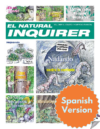
The cover for the Tropical Forest edition in Spanish

Part Of

Tropical Forest - Spanish

Explore Full Journal
SHARE
  • Copy Link
  • Facebook
  • X (Twitter)
  • Pinterest
  • Email
  • Google Classroom
Download PDF
  • PDF preview of the FACTivity from It's a Gas! Spanish version
    In this FACTivity, you will simulate the greenhouse effect and answer the question: What are the similarities between a glass jar with soil and the Earth’s atmosphere? Materials: Two thermometers...

    FACTivity – It’s a Gas! (Spanish)

    • Activity
    • Middle School
    • 1 Hour
    • Active Forest Management
    • Experiment
    • Greenhouse Effect
    • Hands-on
    • Indoor Activity
    • Observation
    • Outdoor Activity
    In this FACTivity, you will simulate the greenhouse effect and answer the question: What are the similarities between a glass jar with soil and the Earth’s atmosphere? Materials: Two thermometers...
    • Explore Activity
    • Download FACTivity (PDF)
    • Explore Activity
    • Download FACTivity (PDF)

    Part Of

    It's a Gas! The Exchange of Gases Between the Soil and the Atmosphere (Spanish)

Download PDF

Glossary

View All Glossary
  • anaerobic

    (an ǝ rō bik): Living, active, occurring, or existing in the absence of free oxygen.

  • bacteria

    (bak tir ē ǝ): (Singular: bacterium) A group of single-celled microorganisms that live in soil, water, the bodies of plants and animals, or matter obtained from living things and are important because of their chemical effects and disease-causing abilities.

  • climate

    (klī mǝt): The average weather conditions of a particular place or region over a period of years.

  • compacted

    (kǝm pak tǝd): Having a dense structure or parts or units closely packed or joined.

  • gaseous

    (ga sē ǝs or ga shǝs): Having the form of or being gas.

  • greenhouse effect

    (grēn hau̇s i fekt): A warming of Earth’s surface and the air above it caused by gases in the air that trap energy from the Sun.

  • porous

    (pȯr ǝs): Full of tiny openings or spaces (as in the skin or the soil); capable of absorbing liquids.

  • sample

    (sam pəl): A small subset group, representative of the entire group.

  • specialization

    (spe sh(ǝ) lǝ zā shǝn): Being designed, trained, or fitted for one particular purpose or job or area of study.

  • A black and white photo of Dr. Michael Keller working in the field.

    Michael Keller

    Physical Scientist

    I like being a scientist because I get to follow my natural curiosity to learn how the Earth system works. My work is split between the field, the office, and...
    View Profile

Jump To

  • Education Standards
  • Educator Guide
  • Lesson Plans
  • Education Files

Standards addressed in this Article:

The Next Generation Science Standards (NGSS) are a set of K-12 science education standards emphasizing inquiry-based learning, real-world applications, and integrating engineering practices, aiming to deepen understanding of science while promoting critical thinking and problem-solving skills.
  • ESS3.C-M1
    Human activities have significantly altered the biosphere, sometimes damaging or destroying natural habitats and causing the extinction of other species. But changes to Earth’s environments can have different impacts (negative and positive) for different living things.
  • ESS3.C-M2
    Typically as human populations and per capita consumption of natural resources increase, so do the negative impacts on Earth unless the activities and technologies involved are engineered otherwise.
  • ESS3.D-M1
    Human activities, such as the release of greenhouse gases from burning fossil fuels, are major factors in the current rise in Earth’s mean surface temperature (global warming). Reducing the level of climate change and reducing human vulnerability to whatever climate changes do occur depend on the understanding of climate science, engineering capabilities, and other kinds of knowledge, such as understanding of human behavior, and on applying that knowledge wisely in decisions and activities.
  • LS1.C-M2
    Within individual organisms, food moves through a series of chemical reactions in which it is broken down and rearranged to form new molecules, to support growth, or to release energy.
  • LS2.A-M1
    Organisms, and populations of organisms, are dependent on their environmental interactions both with other living things and with nonliving factors.
  • LS2.B-M1
    Food webs are models that demonstrate how matter and energy are transferred between producers, consumers, and decomposers as the three groups interact within an ecosystem. Transfers of matter into and out of the physical environment occur at every level. Decomposers recycle nutrients from dead plant or animal matter back to the soil in terrestrial environments or to the water in aquatic environments. The atoms that make up the organisms in an ecosystem are cycled repeatedly between the living and nonliving parts of the ecosystem.
  • LS2.C-M1
    Ecosystems are dynamic in nature; their characteristics can vary over time. Disruptions to any physical or biological component of an ecosystem can lead to shifts in all its populations.
  • PS1.A-M1
    Substances are made from different types of atoms, which combine with one another in various ways. Atoms form molecules that range in size from two to thousands of atoms.
  • PS1.B-M1
    Substances react chemically in characteristic ways. In a chemical process, the atoms that make up the original substances are regrouped into different molecules, and these new substances have different properties from those of the reactants.
  • PS3.D-M1
    The chemical reaction by which plants produce complex food molecules (sugars) requires an energy input (i.e., from sunlight) to occur. In this reaction, carbon dioxide and water combine to form carbon-based organic molecules and release oxygen.
  • PS3.D-M2
    Cellular respiration in plants and animals involve chemical reactions with oxygen that release stored energy. In these processes, complex molecules containing carbon react with oxygen to produce carbon dioxide and other materials.
The Common Core Standards are educational benchmarks in the United States that outline clear expectations for what students should know and be able to do in English language arts and mathematics from kindergarten through 12th grade, aiming to ensure consistency and coherence in education nationwide.
  • Cite specific textual evidence to support analysis of science and technical texts.
  • By the end of grade 8, read and comprehend science/technical texts in the grades 6-8 text complexity band independently and proficiently.
  • Determine the central ideas or conclusions of a text; provide an accurate summary of the text distinct from prior knowledge or opinions.
  • Follow precisely a multistep procedure when carrying out experiments, taking measurements, or performing technical tasks.
  • Determine the meaning of symbols, key terms, and other domain-specific words and phrases as they are used in a specific scientific or technical context relevant to grades 6-8 texts and topics.
  • Analyze the structure an author uses to organize a text, including how the major sections contribute to the whole and to an understanding of the topic.
  • Analyze the author's purpose in providing an explanation, describing a procedure, or discussing an experiment in a text.
  • Integrate quantitative or technical information expressed in words in a text with a version of that information expressed visually (e.g., in a flowchart, diagram, model, graph, or table).
  • Distinguish among facts, reasoned judgment based on research findings, and speculation in a text.
  • Compare and contrast the information gained from experiments, simulations, video, or multimedia sources with that gained from reading a text on the same topic.
Social Studies Standards are educational guidelines outlining the essential knowledge, skills, and concepts students should learn in subjects such as history, geography, civics, and economics, aiming to provide a comprehensive understanding of societal structures, historical events, and global perspectives.
  • People, Places, and Environments
  • Science, Technology, and Society
  • Time, Continuity, and Change

What Is a Natural Inquirer Journal?

Three Natural Inquirer journal covers with NI bee


A Natural Inquirer journal is a collection of 4-8 articles on a related science topic. Journals are written for a middle school audience, but they can also be adapted for both high school students and advanced upper elementary students. Some journals are particularly suited to high school students; you can find our grade level recommendations in the tags on the product page or by filtering journals by grade level.

Journals include:

  • Four to eight articles based on published, peer-reviewed research papers; the articles keep the research paper format (see more below) but are written in language students can understand.
  • A FACTivity for each article, which is an activity to complete after reading the article. The FACTivity helps reinforce major science concepts from the article. These activities are designed to be easy to implement, with few material requirements and options for adapting them for your audience or available resources. Some articles in a journal may have two FACTivities.
  • A short “Welcome to the journal” article about key background information and science concepts that unify the articles included in the journal
  • A glossary of new terms for each article and the introductory materials.
  • A list of related Natural Inquirer publications for each article as well as outside references.
  • Standards correlations, including Next Generation Science Standards, addressed in the articles and the FACTivities.

Journals may also include additional essays (called spotlights), other activities (like crossword puzzles or vocabulary challenges), and more.


A screenshot of the article resource tile for "A Flame Changer" showing the three different format option buttons.

Reading Modes

Journals are available in three different formats:

  • Hard copies can be ordered from the website and shipped, all free of charge.
  • PDF versions of the printed journal can be downloaded free on the website. The PDF version directly replicates the content and layout of the printed version. You can also download individual articles as pdfs.
  • The “Read Distraction Free” option allows the individual articles to open in their own window, without the rest of the website being visible. These articles can be found under the “Articles” tab. This version allows readers to scroll to particular sections of the article using the sidebar menu on the left side of the screen. This version also has interactive Reflection Sections and Number Crunches. Students can enter their answers, submit them, and then receive the correct answers to double-check their work. Submitted answers are not saved on the website and will disappear once the window is closed.

What's in a Natural Inquirer Article?

Here, we'll go into more detail about the parts of a Natural Inquirer article and give you some ideas about how they can be used.
  1. Meet the Scientists

    This section introduces the scientists (and others) who worked on the study. In their own words, they each share a memorable science experience, a favorite research project, or something they learned during the course of their education or research.

    Use this section to:

    • Introduce kids to the variety of people who work in science
    • Introduce kids to the variety of scientific fields and give brief descriptions of science-related jobs
    • Explore ways that people interact with science every day

    Next Generation Science Standards (NGSS) applications:

    • Science and Engineering Practices
    • Crosscutting Concepts: Influence of Science, Engineering, and Technology on Society and the Natural World

    Note that specific standards for this particular monograph are linked on this educator guide tab.

    Other resources:

    Many of the scientists and engineers featured in this section are also featured on our collector cards. Learn more about their work, how they got interested in their fields, and interesting projects they worked on. Cards can be printed as posters, too.

    A sample Meet the Scientists page, showing four different scientists
  2. Thinking About Science

    This section briefly describes a concept about science or scientific research. This overview can touch on topics like

    • study type (longitudinal study, quantitative vs. qualitative data),
    • behaviors of scientists (conducting literature reviews, collaborating with other specialists, replicating earlier studies),
    • the practice of science (the scientific method, engineering design, data collection, randomization, controls and variables),
    • or other aspects of science (bias, correlation vs. causation).

    Use this section to:

    • Reinforce steps in the scientific method and the process of science
    • Encourage students to think about the practice of science and what it can and cannot tell us
    • Consider the many types of scientific study and what information each type can provide

    Next Generation Science Standards applications:

    • Science and Engineering Practices
    • Life Science Disciplinary Core Ideas (depending on topic)
    • Most Crosscutting Concepts (depending on topic)

    Note that specific standards for this particular monograph are linked on this educator guide tab.

    Other resources:

    You can use key words to search for other or related scientific topics on our website (e.g. “longitudinal study,” “bias,” or “sampling”).

    A sample Thinking About Science page from a recent monograph
  3. Thinking About the Environment

    This section provides a brief overview of a topic or concept in environmental/life science. The topic or concept is directly related to the research study that follows. Examples of topics include the carbon cycle, the water cycle, habitat fragmentation, phenology, biodiversity, and ecosystem services.

    Use this section to:

    • Provide important background information to help students understand the research study
    • Serve as a quick reference during reading or class instruction
    • Connect the research article with other activities or media on the same topic

    Next Generation Science Standards applications:

    • Life Science and some Earth Science Disciplinary Core Ideas (depending on topic)
    • Most Crosscutting Concepts (depending on topic)

    Note that specific standards for this particular monograph are linked on this educator guide tab.

    Other resources:

    You can use key words to search for more resources on life or earth science topics on our website (e.g. “habitat,” “carbon,” or “genetics”).

    A sample "Thinking About the Environment" section from a recent monograph
  4. Introduction

    This section begins the scientific article format. Much like the published, peer-reviewed study this article is based on, the introduction provides background information for the study – what is currently known and what remains unknown. The introduction culminates in the question(s) the study hopes to answer.

    The introduction is also the first section with a Reflection Section. This section includes two or three questions to help kids reflect on what they’ve just learned in the Introduction. If they are using the online distraction-free reading mode, they can answer these questions directly on the website.

    Use this section to:

    • Review important background information that kids need to understand the study
    • Connect the study to the concepts addressed in the Thinking About Science and Thinking About the Environment sections
    • Understand research questions and hypotheses, including generating their own hypotheses given what they already know

    Next Generation Science Standards applications:

    • Life Science and some Earth Science Disciplinary Core Ideas (depending on topic)
    • Most Crosscutting Concepts (depending on topic)

    Note that specific standards for this particular monograph are linked on this educator guide tab.

    Other resources:

    Use one of the guided reading lesson plans to help kids follow the format of a scientific paper.

    A sample introduction page from "Hidden in Plain Sight"
  5. Methods

    This section is the nuts and bolts of the study design – the who, what, when, where, why, and how of the research. Contained within the Methods section are usually maps of the study location or the set-up of study plots, as well as details about what data was collected and how.

    The Methods section also ends with a Reflection Section – two or three questions to help students think through what they just read. These questions are interactive on the distraction-free reading mode.

    Use this section to:

    • Show students how experiments and studies are designed and carried out
    • Explore sampling methods and randomization
    • Introduce various data collection tools (e.g. camera traps, surveys, insect collection tools, weather stations, etc.)
    • Explain bias and how studies are designed to remove bias
    • Help students gain experience with map reading

    Next Generation Science Standards applications:

    • Life Science and some Earth Science Disciplinary Core Ideas (depending on topic)
    • Most Crosscutting Concepts (depending on topic)

    Note that specific standards for this particular monograph are linked on this educator guide tab.

    Other resources:

    Many Methods and Findings sections contain Number Crunches, which are simple math exercises designed to help students interact with the data from the study.

    A sample methods section of a monograph article showing a map
  6. Findings

    This section summarizes the data collected during the study. The Findings section usually includes data tables or graphs and highlights the significant data points from the study. This section often mentions statistical analysis or the use of computer programs to model or analyze the data, though these methods are only discussed generally.

    The Findings section also ends with a Reflection Section – two or three questions to help students think through what they just read. These questions are interactive on the distraction-free reading mode.

    Use this section to:

    • Have students practice reading and interpreting graphs and tables
    • Compare results between variables and controls
    • Explain the concept of statistical significance
    • Discuss how no data or negative results still provide valuable information

    Next Generation Science Standards applications:

    • Life Science and some Earth Science Disciplinary Core Ideas (depending on topic)
    • Most Crosscutting Concepts (depending on topic)

    Note that specific standards for this particular monograph are linked on this educator guide tab.

    Other resources:

    Search the website for “map” or “graph” to find activities where students can practice making and reading maps and graphs.

    The beginning of a Findings section featuring a large data table
  7. Discussion

    This section concludes each article. In it, we summarize the main findings of the scientists’ study. Additionally, we present the scientists’ ideas about the limitations of their study, the big-picture impacts of their research, and the scientists’ plans for future study or action.

    The Discussion section ends with a Reflection Section – two or three questions to help students think through what they just read, especially general take-aways from the study. These questions are interactive on the distraction-free reading mode.

    Use this section to:

    • Discuss what conclusions can and cannot be drawn from the available data
    • Explain the difference between correlation and causation
    • Explore study limitations and opportunities for further study
    • Brainstorm ways the study findings could be applied to real-world situations

    Next Generation Science Standards applications:

    • Life Science and some Earth Science Disciplinary Core Ideas (depending on topic)
    • Most Crosscutting Concepts (depending on topic)

    Note that specific standards for this particular monograph are linked on this educator guide tab.

    Other resources:

    Use the “Designing Your Own Study” resource page for videos of scientists discussing their own research studies. The page also includes educator resources to help students plan their own scientific studies.

    The beginning of the conclusion of "Hidden in Plain Sight"

Additional Resources on the Website

A screenshot of the product tabs for an NI monographOn the website, we pair each journal with a variety of other resources, as well. Use the tabs on the product page to browse through the following:

  • Related activities, including the FACTivity for each article
  • An “About” essay that gives some larger context for the research the scientists conducted or more information about the science topic from the journal
  • A glossary of all boldfaced terms from the journal
  • A “Scientists and Collaborators” page that lists the people involved in the studies in the journal; click on a researcher to reach their bio page and see what other articles they might be featured in
  • A “Related Content” page that lists both Natural Inquirer resources about similar topics and also outside reference materials

Article Selection and Review

Natural Inquirer partners with the USDA Forest Service, so we source research studies by Forest Service scientists that have been peer-reviewed and published in reputable journals. Some of our articles have also been created in collaboration with scientists from other Federal agencies, such as U.S. Geological Survey and the United Nations Food and Agriculture Organization, universities, and other non-profits.

All journal articles are reviewed by scientists who conducted the original research study to verify scientific accuracy. Journals are also reviewed by student editorial review boards of middle or high school students before publication. Additionally, all journals are reviewed by the Forest Service and the U.S. Department of Agriculture before publication.

A screenshot of the citation for "Lights, Camera, Tracks"Every journal article includes a citation of its source study. Many educators pair the original research paper with our article to help more advanced students learn how to read formal research papers. The journal article then serves as adapted primary literature, bridging the two articles.

Lessons

  • PDF Preview of Lesson Plan for It's a Gas
    In this lesson plan, students will complete a guided reading of a Natural Inquirer article and then will evaluate the impacts of the scientists’ research on their own behaviors. This...

    Lesson Plan – Guided Reading and Implications

    • Lesson Plan
    • Middle School
    • 1 Classroom Period
    • 2-3 Classroom Periods
    • Applied Science
    • Guided reading
    • Reading Comprehension
    • Reading for Information
    In this lesson plan, students will complete a guided reading of a Natural Inquirer article and then will evaluate the impacts of the scientists’ research on their own behaviors. This...
    • Explore Lesson Plan
    • Download Lesson Plan (PDF)
    • Explore Lesson Plan
    • Download Lesson Plan (PDF)

    Part Of

    It's a Gas! The Exchange of Gases Between the Soil and the Atmosphere

  • PDF preview of the Questions Only lesson plan
    The goal of this lesson plan is to help students identify key concepts and develop their own interpretations of what they read. It includes 42 open-ended questions for them to...

    Lesson Plan – Questions Only

    • Lesson Plan
    • High School
    • Middle School
    • 2-3 Classroom Periods
    • Active Forest Management
    • Agriculture
    • Carbon
    • Citizen Science
    • Engineering and Forest Products
    • Fire
    • Insects
    • Pollinators
    • Pollution
    • Recreation
    • Social Science
    • Water
    • Wilderness
    • Wildlife
    • Class Discussion
    • Interpretation
    • Questions
    The goal of this lesson plan is to help students identify key concepts and develop their own interpretations of what they read. It includes 42 open-ended questions for them to...
    • Explore Lesson Plan
    • Download Lesson Plan (PDF)
    • Explore Lesson Plan
    • Download Lesson Plan (PDF)

    Part Of

    Bioenergy - Vol. 9 No. 1

  • PDF Preview of the KWL Lesson Plan
    Students create a chart to write what they know before reading, what they think they will learn from the article, and then what they learned from the article. This lesson...

    Lesson Plan – K-W-L

    • Lesson Plan
    • High School
    • Middle School
    • 2-3 Classroom Periods
    • Active Forest Management
    • Agriculture
    • Carbon
    • Citizen Science
    • Engineering and Forest Products
    • Fire
    • Insects
    • Pollinators
    • Pollution
    • Recreation
    • Social Science
    • Water
    • Wilderness
    • Wildlife
    • Graphic Organizer
    Students create a chart to write what they know before reading, what they think they will learn from the article, and then what they learned from the article. This lesson...
    • Explore Lesson Plan
    • Download Lesson Plan (PDF)
    • Explore Lesson Plan
    • Download Lesson Plan (PDF)
  • PDF Preview of the Paragraph by Paragraph Lesson Plan
    Focus student understanding of the main idea of a paragraph in each section of a Natural Inquirer article through a reading and note-taking process. This lesson plan can be used with any...

    Lesson Plan – Paragraph by Paragraph

    • Lesson Plan
    • High School
    • Middle School
    • 2-3 Classroom Periods
    • Active Forest Management
    • Agriculture
    • Carbon
    • Citizen Science
    • Engineering and Forest Products
    • Fire
    • Insects
    • Pollinators
    • Pollution
    • Recreation
    • Social Science
    • Water
    • Wilderness
    • Wildlife
    • Graphic Organizer
    Focus student understanding of the main idea of a paragraph in each section of a Natural Inquirer article through a reading and note-taking process. This lesson plan can be used with any...
    • Explore Lesson Plan
    • Download Lesson Plan (PDF)
    • Explore Lesson Plan
    • Download Lesson Plan (PDF)

Education Files

Jump To

  • Related from Natural Inquirer

Related Resources from the Natural Inquirer

  • The cover of "It's a Gas: The Exchange of Gases Between the Soil and the Atmosphere" featuring a black and white drawing of a person looking at a cow through a magnifying glass.
    Tropical forests are sometimes cut down so that humans can use the trees for wood and other products. Then, the cleared land is made into a pasture so that cattle can be raised for human consumption. When...

    It’s a Gas! The Exchange of Gases Between the Soil and the Atmosphere

    • Article
    • Middle School
    • 1 Classroom Period
    • Active Forest Management
    • Agriculture
    • Atmosphere
    • Cattle
    • Deforestation
    • Forest Succession
    • Green House Effect
    • Nitrogen Cycle
    • Pasture
    • Soil
    Tropical forests are sometimes cut down so that humans can use the trees for wood and other products. Then, the cleared land is made into a pasture so that cattle can be raised for human consumption. When...
    • Explore Article
    • Download Article (PDF)
    • Descargar Articulo (PDF)
    • Explore Article
    • Download Article (PDF)
    • Descargar Articulo (PDF)

    Part Of

    Tropical Forest - Vol. 3 No. 1

  • It's a Gas! - Word Search
    Test your knowledge on anaerobic, climate, and the greenhouse effect.

    Word Search – It’s a Gas!

    • Activity
    • Middle School
    • Less than 30 minutes
    • Agriculture
    • Wildlife
    • Anaerobic
    • Bacteria
    • Climate
    • Green House Effect
    • Specialization
    • Vocabulary
    Test your knowledge on anaerobic, climate, and the greenhouse effect.
    • Explore Activity
    • Download Word Search (PDF)
    • Answer Key (PDF)
    • Explore Activity
    • Download Word Search (PDF)
    • Answer Key (PDF)

    Part Of

    It's a Gas! The Exchange of Gases Between the Soil and the Atmosphere


Additional Resources

Back to Top
  • Natural Inquirer - Homepage
  • Find Outdoors
  • USDA
  • USDA Forest Service logo.

The Natural Inquirer program produces a variety of science education materials for PreK through grade 12. Natural Inquirer products are produced by the USDA Forest Service, FIND Outdoors, and other cooperators and partners.

Please enable JavaScript in your browser to complete this form.
* denotes mandatory fields
Loading
  • Facebook
  • Pinterest
  • X, formerly Twitter
  • YouTube
  • About Natural Inquirer
  • Team
  • Partners
  • Press & Past Events
  • Contact Us
  • Accessibility Policy
  • Privacy Policy
  • Shipping Policy
© 2026 - Natural Inquirer | Website Credit