Natural Inquirer - Homepage

Free Science Materials for K-12 Students

  • Bookmarks
  • Account
  • USDA
  • USDA Forest Service logo.
Natural Inquirer - Homepage
  • About
    • About Natural Inquirer
    • Team
    • Partners
    • Press & Past Events
    • Contact Us
  • Resources
    • View All Resources
    • Grade Levels
      • PreK - 2nd Grade
      • Upper Elementary
      • Middle School
      • High School
      • All Grade Levels
    • Resource Types
      • Articles
      • Activities
      • Collector Cards
      • Coloring Pages
      • Videos
      • Lesson Plans
      • Scientists & Collaborators
      • Spotlights
      • Virtual Learning Adventures
      • All Types
    • Resource Topics
      • Wilderness
      • Wildlife
      • Water
      • Active Forest Management
      • Social Science
      • Fire
      • Agriculture
      • Recreation
      • Carbon
      • Insects
      • All Topics
    • Special Collections
      • Artemis Moon Trees
      • Career Exploration
      • Experimental Forests & Ranges
      • Project Learning Tree Connections
      • Globe Connections
      • Designing Your Own Study
      • Smokey Bear
      • Spanish Editions
      • Woodsy Owl
      • Virtual Learning Adventures
      • World's Forests
      • All Special Collections
  • Order Materials
    • View All Products
    • Journals & Monographs
    • Readers
    • Collector Card Packs
    • Coloring Books
  • Educators
    • For Educators
      • Educator Guide
      • Educator Blog
      • Newsletter
    • Classroom Ready Resources
      • Activities
      • Career Exploration
      • Lesson Plans
      • Learning Modules
      • GLOBE Connections
      • Project Learning Tree
    • Get Involved
      • Volunteer Your Classroom
  • Career Exploration
  • Bookmarks
  • Account
  • About
    • About Natural Inquirer
    • Team
    • Partners
    • Press & Past Events
    • Contact
  • Resources
        • View All Resources
        • By Grade
          • PreK - 2nd
          • Upper Elementary
          • Middle School
          • High School
        • By Type
          • Articles
          • Activities
          • Collector Cards
          • Coloring Pages
          • Videos
          • Lesson Plans
          • Learning Modules
          • Journals
          • Monographs
          • Readers
          • Scientists & Collaborators
          • Spotlights
          • Virtual Learning Adventures
          • All Types
        • By Topic
          • Agriculture
          • Active Forest Management
          • Carbon
          • Fire
          • Grasslands
          • Insects
          • Recreation
          • Social Science
          • Water
          • Wilderness
          • Wildlife
          • All Topics
        • Special Collections
          • Artemis Moon Trees
          • Career Exploration
          • Experimental Forests and Ranges
          • GLOBE Connections
          • Project Learning Tree Connections
          • Designing Your Own Study
          • Smokey Bear
          • Spanish Editions
          • Virtual Learning Adventures
          • Woodsy Owl
          • World's Forests
          • All Special Collections
  • Order Materials
        • Download all resources - FREE!

          We will be pausing our services beginning September 25, 2026. We are waiting on a new agreement to be put in a place and are hopeful this pause will be temporary. The website will be available during this time to download and use materials; however, we will not be able to mail hard copies of materials or provide customer support during this time. If you have any questions or concerns about the program, please email SM.FS.RDPublicWeb@usda.gov. We have enjoyed serving you and hope to be able to do so again in the near future.

          View All Products
        • Journals & Monographs

          Journals focus on a group of related articles, while monographs focus on one research article.

          Journals & Monographs
        • Collector Cards

          Learn about possible career opportunities in science!

          View All Card Packs
        • Readers

          For a PreK-2nd grade audience, each Reader focuses on one Forest Service scientist and their research.

          View All Readers
        • Coloring and Activity Books

          Learn more about science through our coloring and outdoor activity books!

          View All Coloring and Activity Books
  • Educators
        • Overview
          • General Educator Guide
          • PreK-2nd Grade Guide
          • Upper Elementary School Guide
          • Middle and High School Guide
          • Non-Formal Education Guide
        • Classroom Ready Resources
          • Career Exploration
          • Learning Modules
          • Lesson Plans
          • Explore All
        • Order Materials
          • View All Free Products
          • Contact Us
        • For Educators
          • Educator Blog
          • Newsletter
          • Project Learning Tree
        • Get Involved
          • Volunteer Your Classroom
  • Career Exploration

Breadcrumb

  • Home
  • Resources
  • Oooh! That’s Growth! Measuring Trees in Cinnamon Bay Watershed
A black and white drawing of two children measuring the diameter of a tree trunk
Bookmark
Please login to bookmark Close

Please login to bookmark


Lost your password?

No account yet? Register

Oooh! That’s Growth! Measuring Trees in Cinnamon Bay Watershed

  • Article
  • Middle School
  • 1 Classroom Period
  • Active Forest Management
  • Conservation
  • Forest Inventory
  • Forest management
  • Trees
  • Watershed
A black and white drawing of two children measuring the diameter of a tree trunk
SHARE
  • Copy Link
  • Facebook
  • X (Twitter)
  • Pinterest
  • Email
  • Google Classroom

In 1956, the United States established a national park on one of the Virgin Islands. The United Nations named the national park a Biosphere Reserve in 1976. To help manage the park as a Biosphere Reserve, the National Park Service wanted to understand how fast the trees were growing. To do this, they invited the Forest Service to do a study of the trees in the Cinnamon Bay watershed, one of the areas within the Biosphere Reserve.

Note: In earlier Natural Inquirer articles like this one, the Discussion section is called "Implications."

Oooh! That’s Growth! Measuring Trees in Cinnamon Bay Watershed

Jump To

  • Meet the Scientist
  • Thinking About Science
  • Thinking About the Environment
  • Introduction
  • Method
  • Results
  • Implications

Meet the Scientist

Peter Weaver

Peter Weaver

Botanist | Plant Ecologist

I like being a scientist because I do a little bit of everything. My background has allowed me to travel, work in different cultures, learn new languages, and work with... Read Full Bio

Thinking About Science

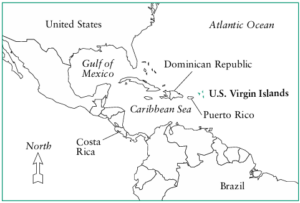
When studying the natural environment, scientists sometimes have to wait many years to discover new things. The scientist in this study wanted to know how the trees were changing in the Cinnamon Bay watershed, St. John, U.S. Virgin Islands National Park (Figure 1).


A map of the location of the U.S. Virgin Islands
Figure 1. Location of U.S. Virgin Islands in the Caribbean.


He was interested in knowing what kind of new trees were growing and what kind of trees were dying. He also wanted to know how fast the trees were growing. If people want to understand the natural environment, they have to know how to describe it. Usually, the best way to describe an environment is to observe it, and then to record your observations. When you know what an environment looked like one year, you can compare it with other years to tell how much it has changed.


Thinking About the Environment

The Virgin Islands National Park is located in the U.S. Virgin Islands (Figure 1). In 1976, the United Nations Educational,
Scientific, and Cultural Organization named the national park a Biosphere Reserve. (The United Nations is an international organization that works for world peace and security.) A Biosphere Reserve is a special label given to natural areas around the world that represent the world’s natural diversity. A biosphere reserve should be managed so that it stays healthy into the future. This is called keeping the area sustainable. To manage a Biosphere Reserve for sustain ability, managers have to consider conservation, research, education, and whether and how to build structures for human use. All of these things must be balanced so that the area stays healthy into the future.


Introduction

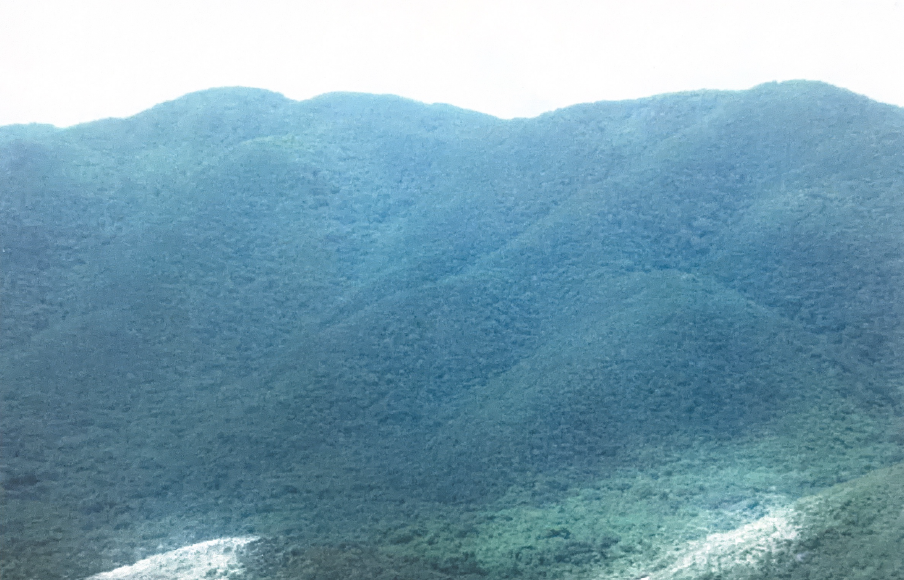
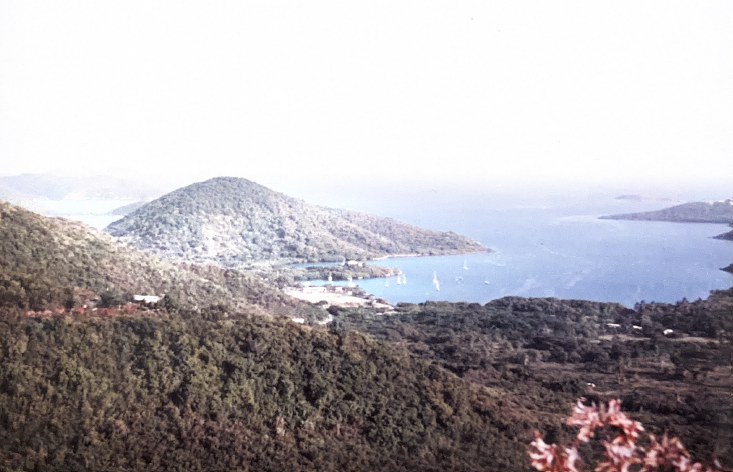
In 1718, Danish settlers moved to what is now the U.S. Virgin Islands. They cut down most of the trees and planted sugar cane. By 1750, almost all of the original trees had been cut down. Over time, new trees were planted or began to grow on their own. In 1917 the United States bought the Virgin Islands from Denmark. By then, only about 10 percent of the island was being used for crops, and the rest of it was again a forest. (What percentage was forested? Subtract 10 percent from 100 percent.) In 1956, the United States established a national park on one of the islands. The United Nations named the national park a Biosphere Reserve in 1976. To help manage the park as a Biosphere Reserve, the National Park Service wanted to understand how fast the trees were growing. To do this, they invited the Forest Service to do a study of the trees in the Cinnamon Bay watershed, one of the areas within the Biosphere Reserve (Figures 2 and 3).


Thinking About Ecology

All living things grow and develop. Think about yourself and your friends. As a living thing, you grow and develop too. Once you stop growing physically, you will continue to change and develop in other ways. When living systems such as forests stop growing bigger, they continue to develop in other ways. In this study the scientist wanted to know how the trees were growing and developing in a watershed in the Virgin Islands. By learning how the trees were growing and developing, he would know about the mixture of trees in the watershed. With this information, the scientist can help managers make better decisions about how to keep the area healthy and sustainable.

Cinnamon Bay watershed

Figure 2.

Cinnamon Bay Watershed in the U.S. virgin Islands

Figure 3.

Figures 2 and 3. Cinnamon Bay watershed in the U. S. Virgin Islands National Park.

Reflection Section

Please enable JavaScript in your browser to complete this form.

Click submit to view the answers.

Form entries are not stored.

Loading

Method

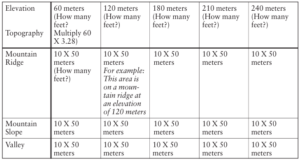
The Cinnamon Bay watershed covers 1.32 km2 (How many square miles is that? Multiply 1.32 X .621), and rises from sea level to 330 meters in elevation (How many feet is that? Multiply 330 X 3.28). Because the scientist could not study the entire area by himself, he decided to identify 16 smaller areas within the watershed to study. Because he wanted these areas to represent the whole watershed, he selected areas at different elevations and topography (Figure 4).


A table showing the different areas studied in the Cinnamon Bay watershed
Figure 4. Areas studied in the Cinnamon Bay watershed.


How many areas have been identified in Figure 4? Compare this number with the number of areas the scientist studied. You should now realize that there was one more area identified by the scientist that is not shown in Figure 4. The scientist located the 16th area near the highest point of the watershed, at 275 meters in elevation. (How many feet is that?)


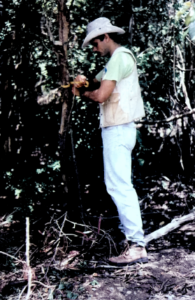
The scientist then measured the height and diameter of almost every tree in the 16 areas. When scientists measure the diameter of a tree, they always measure it at 1.37 meters (or 4.5 feet) above the ground. This measurement is called d.b.h., or diameter at breast height (Figure 5).


A research assistant measuring a tree in a forested area
Figure 5. Research assistant measuring d.b.h. in the Cinnamon Bay watershed.


If the d.b.h. of a tree was less than 4.1 centimeters (or 1.61 inches), the scientist did not include it in his observations. For every tree measured, the type of tree was identified and recorded. The scientist then left the area to grow for 5 years. When he returned 5 years later, he counted all of the new trees and the number of trees that had died, and measured how much the living trees had grown.


Reflection Section

Please enable JavaScript in your browser to complete this form.

Click submit to view the answers.

Form entries are not stored.

Loading

Results

After 5 years, the scientist counted 206 new trees in the 16 areas. He also found that 161 trees had died. Overall, would you say that the watershed is gaining trees or losing trees? Why? The trees grew an average of 0.07 centimeters a year when measured at d.b.h. Most of the trees grew < (less than) 0.10 centimeters a year in height (How many inches is that? Multiply 0.10 X .394) The scientist found no new tree species growing in the study areas.


Reflection Section

Please enable JavaScript in your browser to complete this form.

Click submit to view the answers.

Form entries are not stored.

Loading

Implications

This study will help forest managers in many ways. First, it tells them how much time will be needed for the forest to grow back if, in the future, the trees are cut down or a hurricane destroys the forest. Second, it tells scientists what kind of trees grow at different elevations in this tropical watershed. This could be especially helpful if managers want to plant trees in a similar area. Finally, this study helps managers to identify which trees are common and which are rare in the tropical watershed. It also tells managers which trees will grow to maturity, if there is no hurricane or other disturbance. You can see that by studying the current conditions of a natural area, scientists can help forest managers protect the area into the future.

Reflection Section

Please enable JavaScript in your browser to complete this form.

Click submit to view the answers.

Form entries are not stored.

Loading

From Weaver, P. L. (1990). Tree diameter growth rates in Cinnamon Bay watershed, St. John, U.S. Virgin Islands. Caribbean Journal of Science, 26(1-2): 1-6.

Cover image for Natural Enquirer Tropical Forest Edition, Volume 3, Number 1 that shows the article names with accompanying graphics.

Part Of

Tropical Forest - Vol. 3 No. 1

Explore Full Journal
SHARE
  • Copy Link
  • Facebook
  • X (Twitter)
  • Pinterest
  • Email
  • Google Classroom
Read Distraction Free Download PDF
  • PDF preview of Measuring Trees in Cinnamon Bay Watershed FACTivity.
    For this FACTivity, you will answer the question: What is the relationship between tree height and the diameter at breast height (DBH)? In other words, when trees get taller, does...

    FACTivity – Oooh! That’s Growth!

    • Activity
    • Middle School
    • 1 Classroom Period
    • Active Forest Management
    • Diameter at Breast Height (DBH)
    • Measuring
    • Outdoor Activity
    • Tree Inventory
    For this FACTivity, you will answer the question: What is the relationship between tree height and the diameter at breast height (DBH)? In other words, when trees get taller, does...
    • Explore Activity
    • Download FACTivity (PDF)
    • Explore Activity
    • Download FACTivity (PDF)

    Part Of

    Oooh! That's Growth! Measuring Trees in Cinnamon Bay Watershed

  • Oooh! That's Growth! - Word Search
    Test your knowledge on watersheds, diversity, and species.

    Word Search – Oooh! That’s Growth!

    • Activity
    • Middle School
    • Less than 30 minutes
    • Conservation
    • Diameter
    • Elevation
    • Species
    • Sustainable
    • Vocabulary
    • Watershed
    Test your knowledge on watersheds, diversity, and species.
    • Explore Activity
    • Download Word Search (PDF)
    • Answer Key (PDF)
    • Explore Activity
    • Download Word Search (PDF)
    • Answer Key (PDF)

    Part Of

    Oooh! That's Growth! Measuring Trees in Cinnamon Bay Watershed

Download PDF

Jump To

  • Education Standards
  • Educator Guide
  • Lesson Plans
  • Education Files

Standards addressed in this Article:

The Next Generation Science Standards (NGSS) are a set of K-12 science education standards emphasizing inquiry-based learning, real-world applications, and integrating engineering practices, aiming to deepen understanding of science while promoting critical thinking and problem-solving skills.
  • ESS3.C-M1
    Human activities have significantly altered the biosphere, sometimes damaging or destroying natural habitats and causing the extinction of other species. But changes to Earth’s environments can have different impacts (negative and positive) for different living things.
  • LS2.A-M1
    Organisms, and populations of organisms, are dependent on their environmental interactions both with other living things and with nonliving factors.
  • LS2.A-M2
    In any ecosystem, organisms and populations with similar requirements for food, water, oxygen, or other resources may compete with each other for limited resources, access to which consequently constrains their growth and reproduction.
  • LS2.A-M3
    Growth of organisms and population increases are limited by access to resources.
  • LS2.C-M1
    Ecosystems are dynamic in nature; their characteristics can vary over time. Disruptions to any physical or biological component of an ecosystem can lead to shifts in all its populations.
The Common Core Standards are educational benchmarks in the United States that outline clear expectations for what students should know and be able to do in English language arts and mathematics from kindergarten through 12th grade, aiming to ensure consistency and coherence in education nationwide.
  • Cite specific textual evidence to support analysis of science and technical texts.
  • By the end of grade 8, read and comprehend science/technical texts in the grades 6-8 text complexity band independently and proficiently.
  • Determine the central ideas or conclusions of a text; provide an accurate summary of the text distinct from prior knowledge or opinions.
  • Follow precisely a multistep procedure when carrying out experiments, taking measurements, or performing technical tasks.
  • Determine the meaning of symbols, key terms, and other domain-specific words and phrases as they are used in a specific scientific or technical context relevant to grades 6-8 texts and topics.
  • Analyze the structure an author uses to organize a text, including how the major sections contribute to the whole and to an understanding of the topic.
  • Analyze the author's purpose in providing an explanation, describing a procedure, or discussing an experiment in a text.
  • Integrate quantitative or technical information expressed in words in a text with a version of that information expressed visually (e.g., in a flowchart, diagram, model, graph, or table).
  • Distinguish among facts, reasoned judgment based on research findings, and speculation in a text.
  • Compare and contrast the information gained from experiments, simulations, video, or multimedia sources with that gained from reading a text on the same topic.
Social Studies Standards are educational guidelines outlining the essential knowledge, skills, and concepts students should learn in subjects such as history, geography, civics, and economics, aiming to provide a comprehensive understanding of societal structures, historical events, and global perspectives.
  • People, Places, and Environments
  • Science, Technology, and Society
  • Time, Continuity, and Change

What Is a Natural Inquirer Journal?
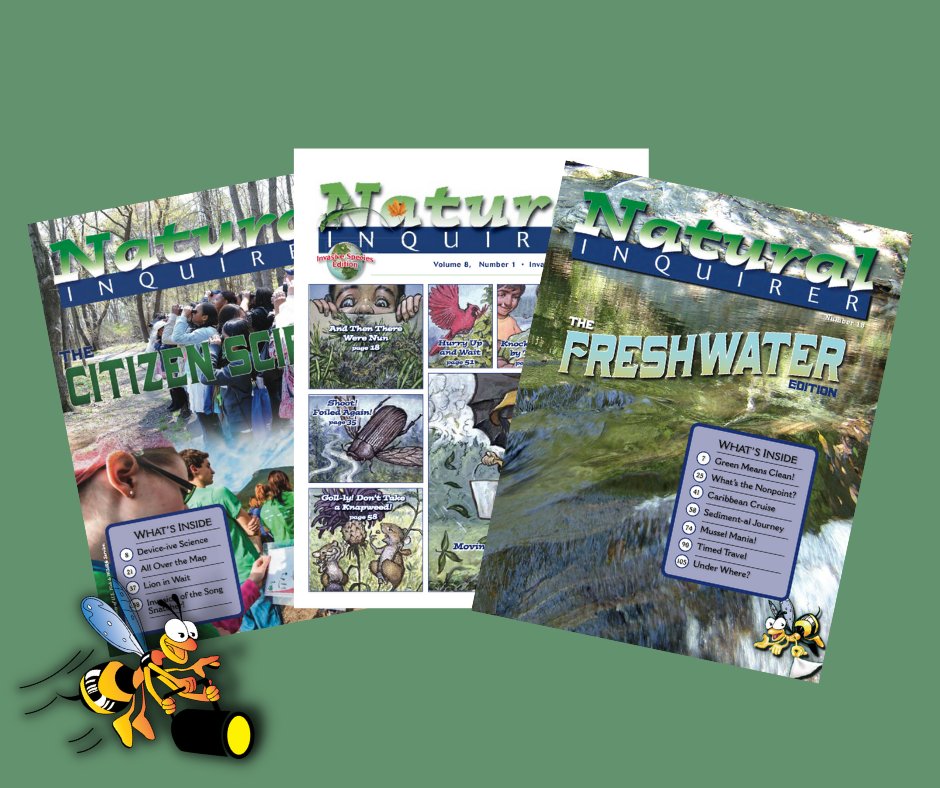
Three Natural Inquirer journal covers with NI bee


A Natural Inquirer journal is a collection of 4-8 articles on a related science topic. Journals are written for a middle school audience, but they can also be adapted for both high school students and advanced upper elementary students. Some journals are particularly suited to high school students; you can find our grade level recommendations in the tags on the product page or by filtering journals by grade level.

Journals include:

  • Four to eight articles based on published, peer-reviewed research papers; the articles keep the research paper format (see more below) but are written in language students can understand.
  • A FACTivity for each article, which is an activity to complete after reading the article. The FACTivity helps reinforce major science concepts from the article. These activities are designed to be easy to implement, with few material requirements and options for adapting them for your audience or available resources. Some articles in a journal may have two FACTivities.
  • A short “Welcome to the journal” article about key background information and science concepts that unify the articles included in the journal
  • A glossary of new terms for each article and the introductory materials.
  • A list of related Natural Inquirer publications for each article as well as outside references.
  • Standards correlations, including Next Generation Science Standards, addressed in the articles and the FACTivities.

Journals may also include additional essays (called spotlights), other activities (like crossword puzzles or vocabulary challenges), and more.
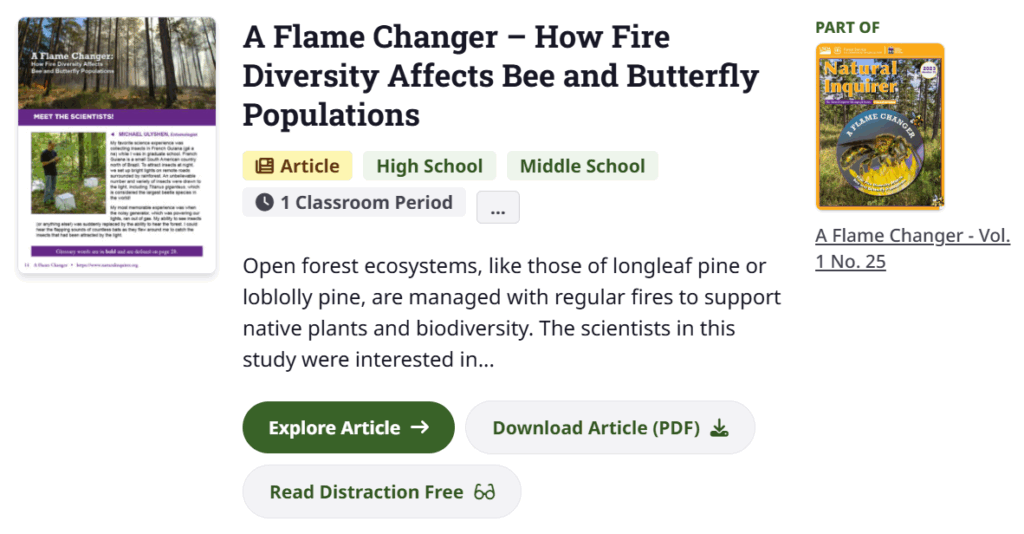
 

A screenshot of the article resource tile for "A Flame Changer" showing the three different format option buttons.

Reading Modes

Journals are available in three different formats:

  • Hard copies can be ordered from the website and shipped, all free of charge.
  • PDF versions of the printed journal can be downloaded free on the website. The PDF version directly replicates the content and layout of the printed version. You can also download individual articles as pdfs.
  • The “Read Distraction Free” option allows the individual articles to open in their own window, without the rest of the website being visible. These articles can be found under the “Articles” tab. This version allows readers to scroll to particular sections of the article using the sidebar menu on the left side of the screen. This version also has interactive Reflection Sections and Number Crunches. Students can enter their answers, submit them, and then receive the correct answers to double-check their work. Submitted answers are not saved on the website and will disappear once the window is closed.

What's in a Natural Inquirer Article?

Here, we'll go into more detail about the parts of a Natural Inquirer article and give you some ideas about how they can be used.
  1. Meet the Scientists

    This section introduces the scientists (and others) who worked on the study. In their own words, they each share a memorable science experience, a favorite research project, or something they learned during the course of their education or research.

    Use this section to:

    • Introduce kids to the variety of people who work in science
    • Introduce kids to the variety of scientific fields and give brief descriptions of science-related jobs
    • Explore ways that people interact with science every day

    Next Generation Science Standards (NGSS) applications:

    • Science and Engineering Practices
    • Crosscutting Concepts: Influence of Science, Engineering, and Technology on Society and the Natural World

    Note that specific standards for this particular journal are linked on this educator guide tab.

    Other resources:

    Many of the scientists and engineers featured in this section are also featured on our collector cards. Learn more about their work, how they got interested in their fields, and interesting projects they worked on. Cards can be printed as posters, too.
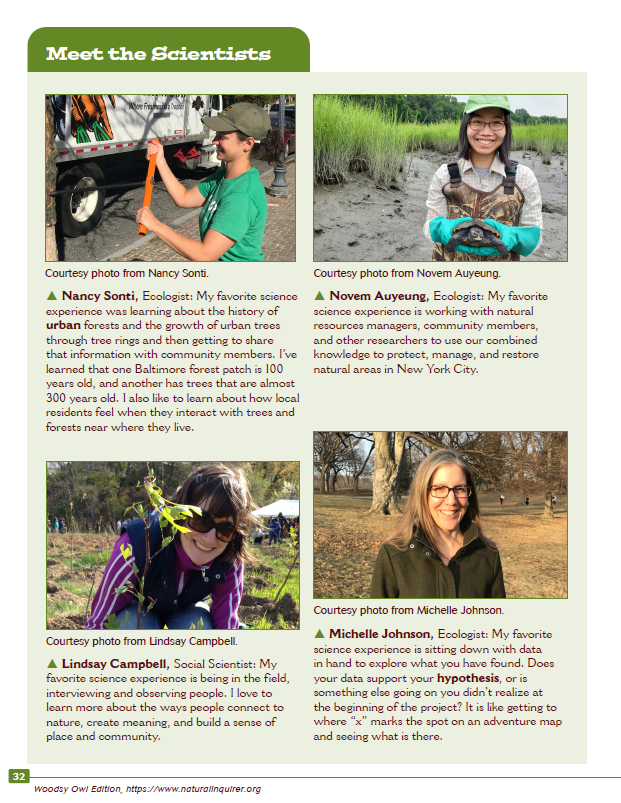
    A sample Meet the Scientists page, showing four different scientists
  2. Thinking About Science

    This section briefly describes a concept about science or scientific research. This overview can touch on topics like

    • study type (longitudinal study, quantitative vs. qualitative data),
    • behaviors of scientists (conducting literature reviews, collaborating with other specialists, replicating earlier studies),
    • the practice of science (the scientific method, engineering design, data collection, randomization, controls and variables),
    • or other aspects of science (bias, correlation vs. causation).

    Use this section to:

    • Reinforce steps in the scientific method and the process of science
    • Encourage students to think about the practice of science and what it can and cannot tell us
    • Consider the many types of scientific study and what information each type can provide

    Next Generation Science Standards applications:

    • Science and Engineering Practices
    • Life Science Disciplinary Core Ideas (depending on topic)
    • Most Crosscutting Concepts (depending on topic)

    Note that specific standards for this particular journal are linked on this educator guide tab.

    Other resources:

    You can use key words to search for other or related scientific topics on our website (e.g. “longitudinal study,” “bias,” or “sampling”).
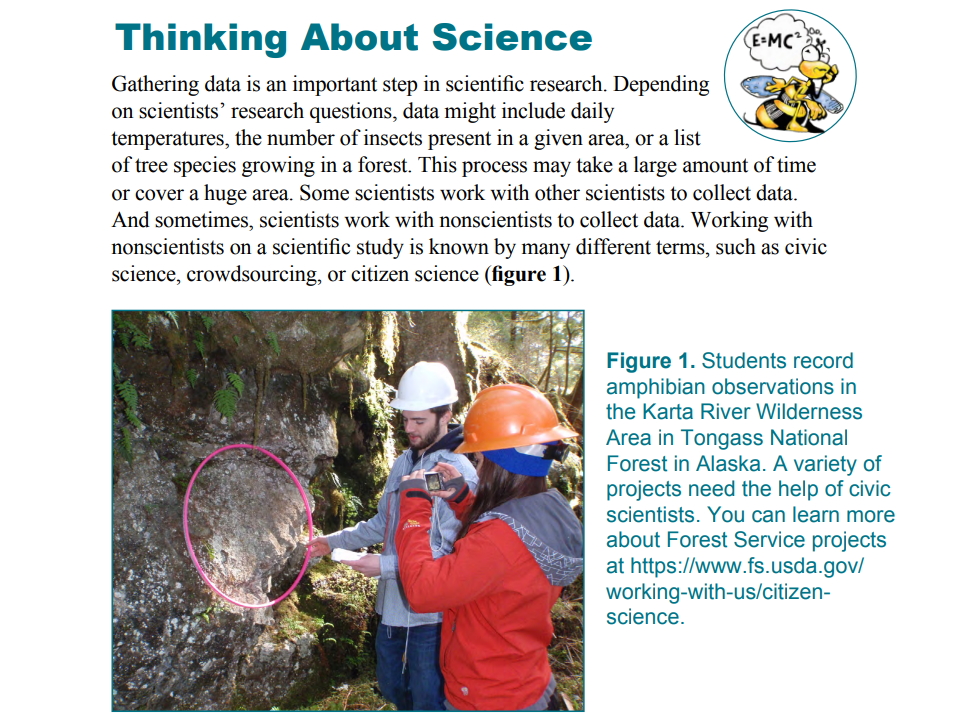
    A sample Thinking About Science page from a recent monograph
  3. Thinking About the Environment

    This section provides a brief overview of a topic or concept in environmental/life science. The topic or concept is directly related to the research study that follows. Examples of topics include the carbon cycle, the water cycle, habitat fragmentation, phenology, biodiversity, and ecosystem services.

    Use this section to:

    • Provide important background information to help students understand the research study
    • Serve as a quick reference during reading or class instruction
    • Connect the research article with other activities or media on the same topic

    Next Generation Science Standards applications:

    • Life Science and some Earth Science Disciplinary Core Ideas (depending on topic)
    • Most Crosscutting Concepts (depending on topic)

    Note that specific standards for this particular journal are linked on this educator guide tab.

    Other resources:

    You can use key words to search for more resources on life or earth science topics on our website (e.g. “habitat,” “carbon,” or “genetics”).
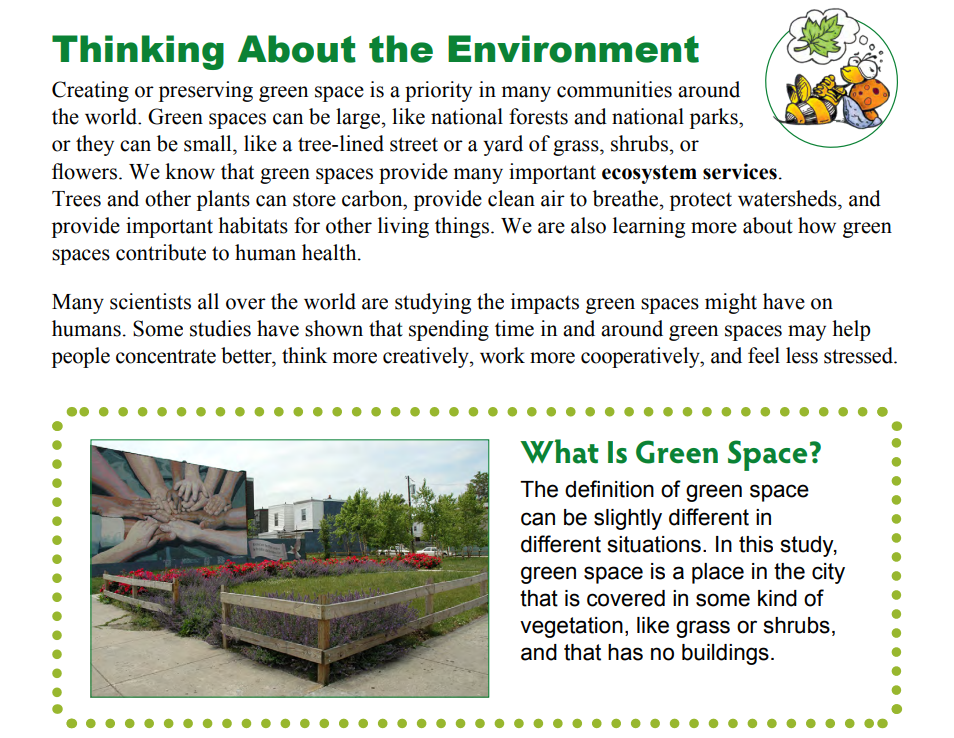
    A sample "Thinking About the Environment" section from a recent monograph
  4. Introduction

    This section begins the scientific article format. Much like the published, peer-reviewed study this article is based on, the introduction provides background information for the study – what is currently known and what remains unknown. The introduction culminates in the question(s) the study hopes to answer.

    The introduction is also the first section with a Reflection Section. This section includes two or three questions to help kids reflect on what they’ve just learned in the Introduction. If they are using the online distraction-free reading mode, they can answer these questions directly on the website.

    Use this section to:

    • Review important background information that kids need to understand the study
    • Connect the study to the concepts addressed in the Thinking About Science and Thinking About the Environment sections
    • Understand research questions and hypotheses, including generating their own hypotheses given what they already know

    Next Generation Science Standards applications:

    • Life Science and some Earth Science Disciplinary Core Ideas (depending on topic)
    • Most Crosscutting Concepts (depending on topic)

    Note that specific standards for this particular journal are linked on this educator guide tab.

    Other resources:

    Use one of the guided reading lesson plans to help kids follow the format of a scientific paper.
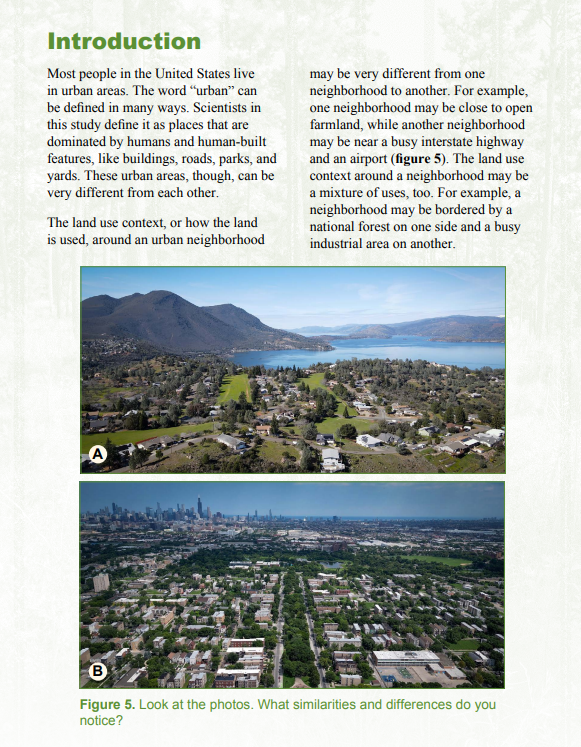
    A sample introduction page from "Hidden in Plain Sight"
  5. Methods

    This section is the nuts and bolts of the study design – the who, what, when, where, why, and how of the research. Contained within the Methods section are usually maps of the study location or the set-up of study plots, as well as details about what data was collected and how.

    The Methods section also ends with a Reflection Section – two or three questions to help students think through what they just read. These questions are interactive on the distraction-free reading mode.

    Use this section to:

    • Show students how experiments and studies are designed and carried out
    • Explore sampling methods and randomization
    • Introduce various data collection tools (e.g. camera traps, surveys, insect collection tools, weather stations, etc.)
    • Explain bias and how studies are designed to remove bias
    • Help students gain experience with map reading

    Next Generation Science Standards applications:

    • Life Science and some Earth Science Disciplinary Core Ideas (depending on topic)
    • Most Crosscutting Concepts (depending on topic)

    Note that specific standards for this particular journal are linked on this educator guide tab.

    Other resources:

    Many Methods and Findings sections contain Number Crunches, which are simple math exercises designed to help students interact with the data from the study.
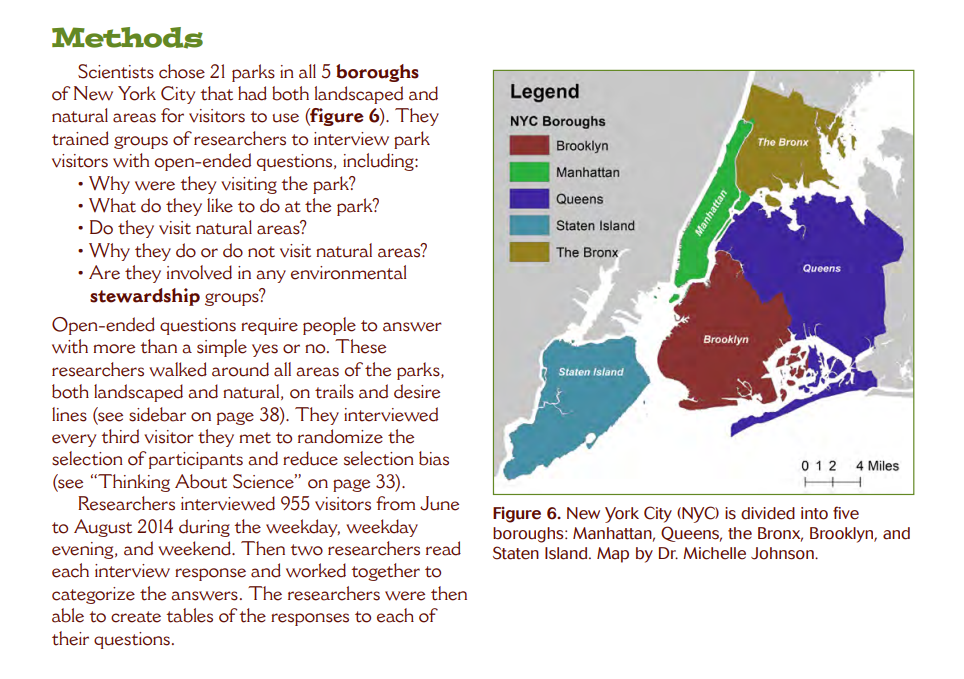
    A sample methods section of a monograph article showing a map
  6. Findings

    This section summarizes the data collected during the study. The Findings section usually includes data tables or graphs and highlights the significant data points from the study. This section often mentions statistical analysis or the use of computer programs to model or analyze the data, though these methods are only discussed generally.

    The Findings section also ends with a Reflection Section – two or three questions to help students think through what they just read. These questions are interactive on the distraction-free reading mode.

    Use this section to:

    • Have students practice reading and interpreting graphs and tables
    • Compare results between variables and controls
    • Explain the concept of statistical significance
    • Discuss how no data or negative results still provide valuable information

    Next Generation Science Standards applications:

    • Life Science and some Earth Science Disciplinary Core Ideas (depending on topic)
    • Most Crosscutting Concepts (depending on topic)

    Note that specific standards for this particular journal are linked on this educator guide tab.

    Other resources:

    Search the website for “map” or “graph” to find activities where students can practice making and reading maps and graphs.
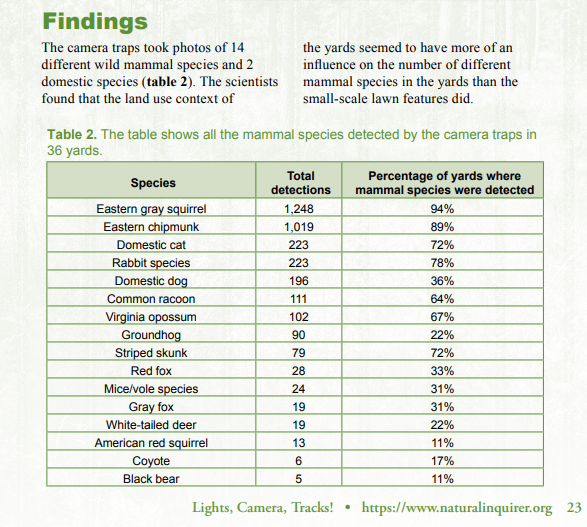
    The beginning of a Findings section featuring a large data table
  7. Discussion

    This section concludes each article. In it, we summarize the main findings of the scientists’ study. Additionally, we present the scientists’ ideas about the limitations of their study, the big-picture impacts of their research, and the scientists’ plans for future study or action.

    The Discussion section ends with a Reflection Section – two or three questions to help students think through what they just read, especially general take-aways from the study. These questions are interactive on the distraction-free reading mode.

    Use this section to:

    • Discuss what conclusions can and cannot be drawn from the available data
    • Explain the difference between correlation and causation
    • Explore study limitations and opportunities for further study
    • Brainstorm ways the study findings could be applied to real-world situations

    Next Generation Science Standards applications:

    • Life Science and some Earth Science Disciplinary Core Ideas (depending on topic)
    • Most Crosscutting Concepts (depending on topic)

    Note that specific standards for this particular journal are linked on this educator guide tab.

    Other resources:

    Use the “Designing Your Own Study” resource page for videos of scientists discussing their own research studies. The page also includes educator resources to help students plan their own scientific studies.
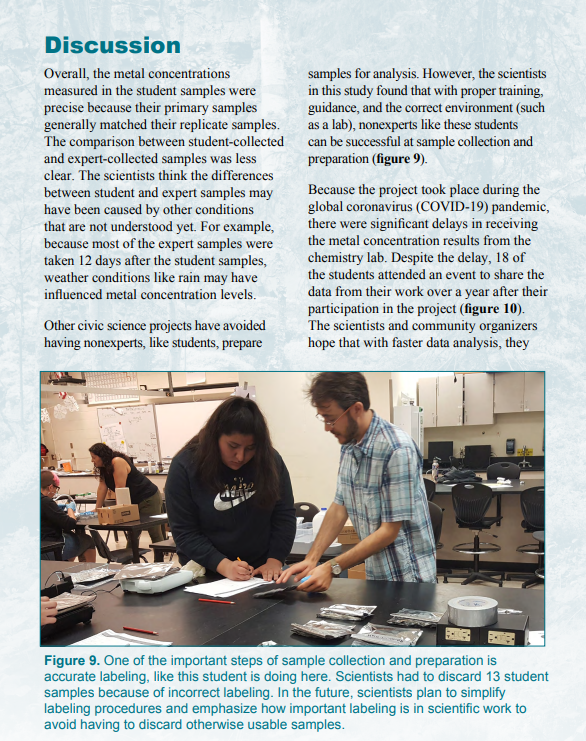
    The beginning of the conclusion of "Hidden in Plain Sight"

Additional Resources on the Website

A screenshot of the product tabs for an NI monographOn the website, we pair each journal with a variety of other resources, as well. Use the tabs on the product page to browse through the following:

  • Related activities, including the FACTivity for each article
  • An “About” essay that gives some larger context for the research the scientists conducted or more information about the science topic from the journal
  • A glossary of all boldfaced terms from the journal
  • A “Scientists and Collaborators” page that lists the people involved in the studies in the journal; click on a researcher to reach their bio page and see what other articles they might be featured in
  • A “Related Content” page that lists both Natural Inquirer resources about similar topics and also outside reference materials

Article Selection and Review

Natural Inquirer partners with the USDA Forest Service, so we source research studies by Forest Service scientists that have been peer-reviewed and published in reputable journals. Some of our articles have also been created in collaboration with scientists from other Federal agencies, such as U.S. Geological Survey and the United Nations Food and Agriculture Organization, universities, and other non-profits.

All journal articles are reviewed by scientists who conducted the original research study to verify scientific accuracy. Journals are also reviewed by student editorial review boards of middle or high school students before publication. Additionally, all journals are reviewed by the Forest Service and the U.S. Department of Agriculture before publication.

A screenshot of the citation for "Lights, Camera, Tracks"Every journal article includes a citation of its source study. Many educators pair the original research paper with our article to help more advanced students learn how to read formal research papers. The journal article then serves as adapted primary literature, bridging the two articles.

Lessons

  • PDF preview of the Questions Only lesson plan
    The goal of this lesson plan is to help students identify key concepts and develop their own interpretations of what they read. It includes 42 open-ended questions for them to...

    Lesson Plan – Questions Only

    • Lesson Plan
    • High School
    • Middle School
    • 2-3 Classroom Periods
    • Active Forest Management
    • Agriculture
    • Carbon
    • Citizen Science
    • Engineering and Forest Products
    • Fire
    • Insects
    • Pollinators
    • Pollution
    • Recreation
    • Social Science
    • Water
    • Wilderness
    • Wildlife
    • Class Discussion
    • Interpretation
    • Questions
    The goal of this lesson plan is to help students identify key concepts and develop their own interpretations of what they read. It includes 42 open-ended questions for them to...
    • Explore Lesson Plan
    • Download Lesson Plan (PDF)
    • Explore Lesson Plan
    • Download Lesson Plan (PDF)

    Part Of

    Bioenergy - Vol. 9 No. 1

  • PDF Preview of the KWL Lesson Plan
    Students create a chart to write what they know before reading, what they think they will learn from the article, and then what they learned from the article. This lesson...

    Lesson Plan – K-W-L

    • Lesson Plan
    • High School
    • Middle School
    • 2-3 Classroom Periods
    • Active Forest Management
    • Agriculture
    • Carbon
    • Citizen Science
    • Engineering and Forest Products
    • Fire
    • Insects
    • Pollinators
    • Pollution
    • Recreation
    • Social Science
    • Water
    • Wilderness
    • Wildlife
    • Graphic Organizer
    Students create a chart to write what they know before reading, what they think they will learn from the article, and then what they learned from the article. This lesson...
    • Explore Lesson Plan
    • Download Lesson Plan (PDF)
    • Explore Lesson Plan
    • Download Lesson Plan (PDF)
  • PDF Preview of the Paragraph by Paragraph Lesson Plan
    Focus student understanding of the main idea of a paragraph in each section of a Natural Inquirer article through a reading and note-taking process. This lesson plan can be used with any...

    Lesson Plan – Paragraph by Paragraph

    • Lesson Plan
    • High School
    • Middle School
    • 2-3 Classroom Periods
    • Active Forest Management
    • Agriculture
    • Carbon
    • Citizen Science
    • Engineering and Forest Products
    • Fire
    • Insects
    • Pollinators
    • Pollution
    • Recreation
    • Social Science
    • Water
    • Wilderness
    • Wildlife
    • Graphic Organizer
    Focus student understanding of the main idea of a paragraph in each section of a Natural Inquirer article through a reading and note-taking process. This lesson plan can be used with any...
    • Explore Lesson Plan
    • Download Lesson Plan (PDF)
    • Explore Lesson Plan
    • Download Lesson Plan (PDF)

Education Files

Glossary

View All Glossary
  • conservation

    (kän(t) sər vā shən): A careful preservation and protection of something, especially planned management of a natural resource to prevent exploitation, destruction, or neglect.

  • diameter

    (dī a mǝ tǝr): The length of a straight line through the center of an object or space.

  • diversity

    (dǝ vǝr si tē): The condition of having or being composed of differing elements; variety.

  • elevation

    (e lǝ vā shǝn): The height above sea level.

  • represent

    (re pri zent): To serve as a specimen, example, or instance of.

  • sea level

    (sē le vǝl): The level of the surface of the sea.

  • species

    (spē sēz or spē shēz): A category of living things that ranks below a genus, is made up of related individuals able to produce fertile offspring, and is identified by a two-part scientific name.

  • sustainable

    (sǝ stā nǝ bǝl): Of, relating to, or being a method of harvesting or using a resource so that the resource is not used up or permanently damaged.

  • topography

    (tǝ päg rǝ fē): The shape and height and depth of the features of a place.

  • watershed

    (wȯ tǝr shed): A region or area bounded on the edge by a dividing ridge and draining ultimately to a particular watercourse or body of water.

  • A black and white image of Dr. Weaver

    Peter Weaver

    Botanist | Plant Ecologist

    I like being a scientist because I do a little bit of everything. My background has allowed me to travel, work in different cultures, learn new languages, and work with...
    View Profile
Back to Top
  • Natural Inquirer - Homepage
  • USDA
  • USDA Forest Service logo.

The Natural Inquirer program produces a variety of science education materials for PreK through grade 12. Natural Inquirer products are produced by the USDA Forest Service and other cooperators and partners.

Please enable JavaScript in your browser to complete this form.
* denotes mandatory fields
Loading
  • Facebook
  • Pinterest
  • X, formerly Twitter
  • YouTube
  • About Natural Inquirer
  • Team
  • Partners
  • Press & Past Events
  • Contact Us
  • Accessibility Policy
  • Privacy Policy
  • Shipping Policy
© 2026 - Natural Inquirer | Website Credit