


Return to Collector Cards

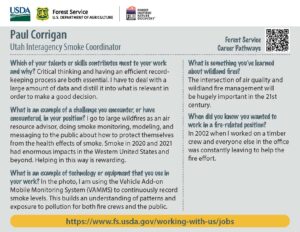
Paul Corrigan, Utah Interagency Smoke Coordinator
FireFire Career
- B.S., Virginia Tech
- USDA Forest Service
- As a smoke coordinator, I am the liaison between all the land managers doing prescribed fire (Forest Service, National Park Service, Bureau of Land Management, Utah Department of Natural Resources, etc.) and the Utah Division of Air Quality.
- B.S., Virginia Tech
- USDA Forest Service
- As a smoke coordinator, I am the liaison between all the land managers doing prescribed fire (Forest Service, National Park Service, Bureau of Land Management, Utah Department of Natural Resources, etc.) and the Utah Division of Air Quality.

