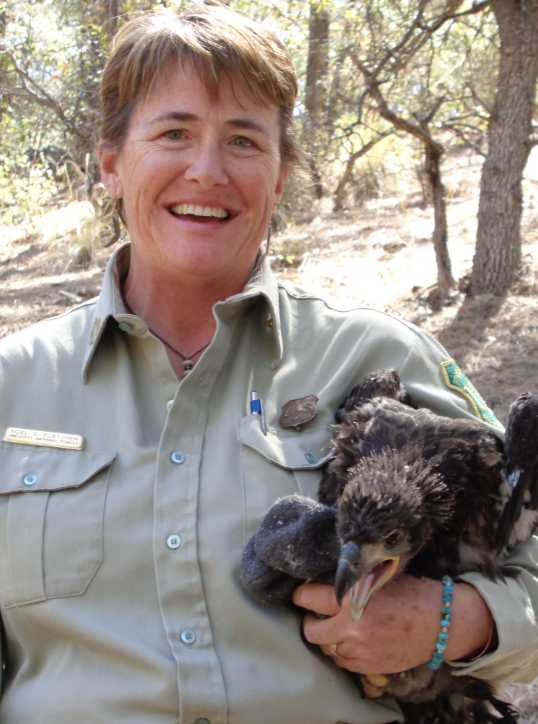
A wildlife biologist collects and shares information to ensure that wildlife species’ needs are considered when designing and implementing projects on public lands, from mountain bike rides to prescribed fires and new trails construction to old road closures.
My curiosity helps me to discover information for the needs of wildlife. Good record keeping is essential for understanding the history of an area and planning for the future. Teamwork and problem solving are my most valuable tools for working with partners inside and outside of the Forest Service.
How do I protect nesting Peregrine Falcons on a popular rock climbing cliff face? Rock climbing during the nesting season scared the falcons away, preventing them from nesting. Now, a coordinated closure on Granite Mountain provides nesting in the spring and summer and climbing in the fall and winter.
I use everything from Post-It® notes for quick comments to Global Positioning System (GPS) units for locating places in the field. I use geographic information systems (GIS) to make maps, binoculars to identify birds, e-mails to share information, and video-chatting to communicate with co-workers. When no one is around, I have trail cameras capture pictures of critters.
Sharing my passion for nature, with the help of a generous partner, I took Special Olympic families on a kayak trip down the Verde River. Engaging people of all ages in new fun things they can do and learn in nature is a rewarding part of my job.
I have been drawn to nature since I was a child reading Ranger Rick. I spent many summer days exploring every nook and cranny of the Pennsylvania countryside where I was raised, looking for animals, wading in creeks, and riding my bike or pony to investigate whatever caught my eye.