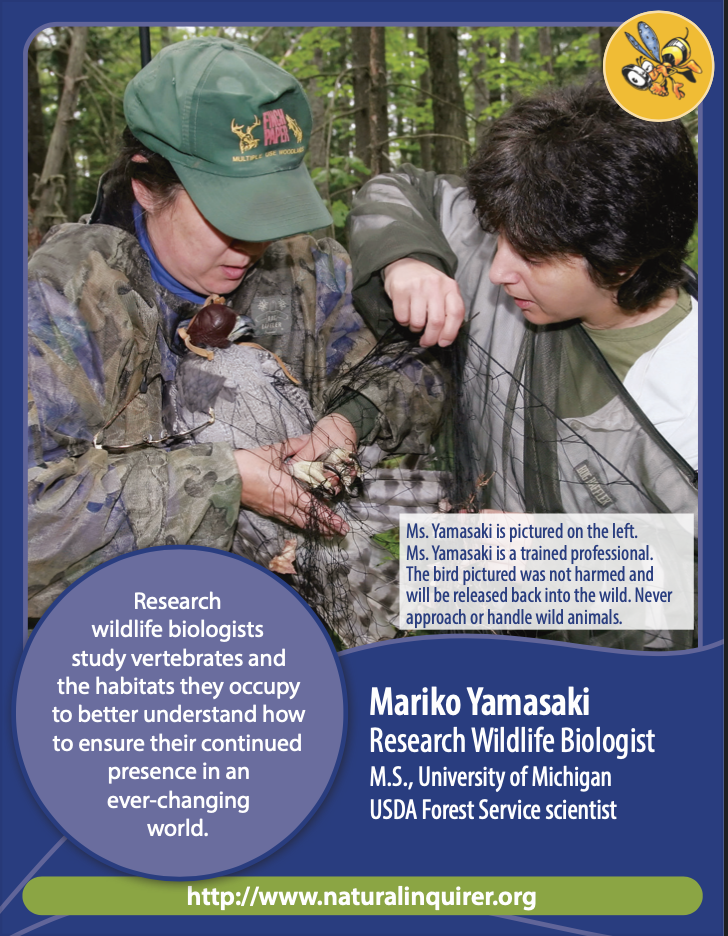
Research wildlife biologists study vertebrates and the habitats they occupy to better understand how to ensure their continued presence in an ever-changing world.
Curiosity, careful observation, and critical thinking.
What does Northern Goshawk nesting habitat look like in New Hampshire?
We use standard forestry tools (e.g., prisms, diameter tapes, clinometers, and Global Positioning System (GPS) units) to collect our habitat data and computers and specialized software to analyze our data. We also use ancient falconry techniques like those seen in my picture (dho gazza nets and leather hoods) to safely capture and handle our study birds.
It’s exciting to learn how different vertebrate species (e.g., Neotropical migratory birds, Northern Goshawks, red backed salamanders) use managed forest habitats. It‘s especially exciting learning that our banded, Northern Goshawk adult females return to their nesting territories in subsequent years.
I began on a medical education pathway, but soon realized my interests, enthusiasm, and abilities lay in observing the vertebrate world and their diverse habitats. I was very interested in public service which led to becoming a research wildlife biologist with the Forest Service.