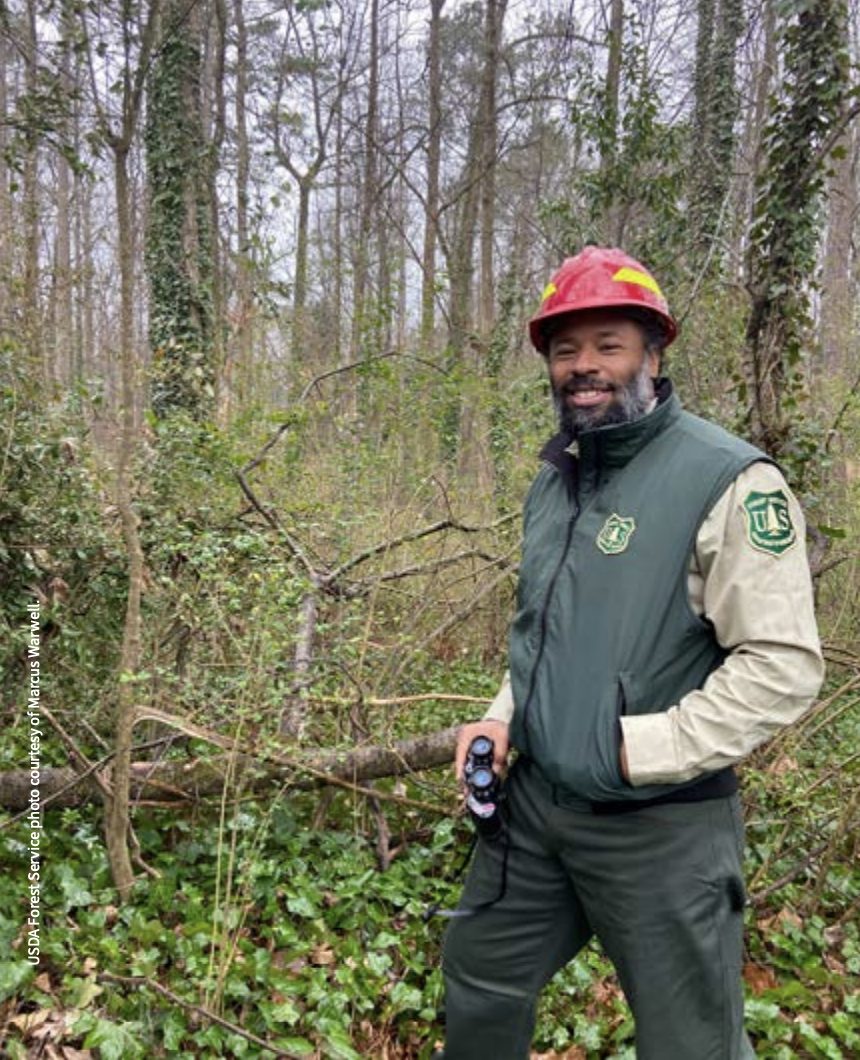
As a forest geneticist, I oversee seed orchards, seed extractories, and seed bank resources. These resources supply cost-effective, genetically diverse, and genetically appropriate seeds for different places across the country. As part of the Moon Trees project, I am involved in the growth and development of tree seeds.
We need forest geneticists to support the management of healthy forests, conservation, and tree improvement. If students become forest geneticists, they could be employed in Federal, State, or private sectors as managers and researchers. They could work in labs, nurseries, and field settings.
Given a change in climate, where can seeds be planted or moved to match their adaptation to the future expected climate?
I use digital calipers with transmitters. This equipment allows me to record hundreds of seedling growth measurements in a short period while working in the field.
Studying adaptive variation in whitebark pine was the most exciting project I’ve done in my career. The project included cone collecting from wild populations in the Rocky Mountains and field testing of next generations. The data helped us describe patterns in how whitebark pine populations have adapted over generations.
My first memory of being interested in forest genetics was during a summer research internship with the Forest Service during my sophomore year of college. The experience exposed me to forest genetics research in the field over many weeks.