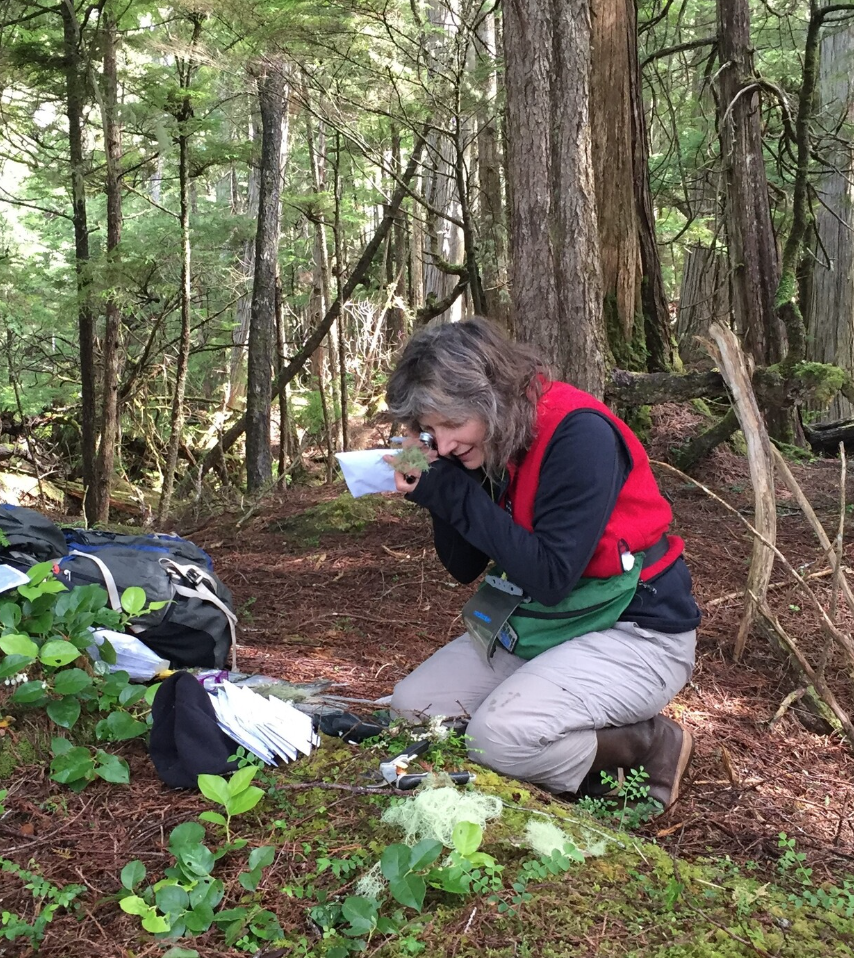
A lichenologist is someone who studies lichens in their natural habitat. Lichens are made up of more than one organism, but the main partners are fungi and algae. The fungal partner is the body of the lichen we can see easily in nature, while the algal partner is hidden inside the fungal layers.
My sense of curiosity about nature helps me the most because there are many secrets nature has that humans are not aware of. Studying lichens also includes a sense of discovery because this work helps scientists understand many aspects of the natural world and how we may impact it.
Is air quality in an area of concern negatively impacting sensitive organisms such as lichens?
One example of technology is a simple hand lens that helps bring lichens close to the human eye. Some of the features on lichens are hard to see without magnification. This handy tool hangs around your neck and can be invaluable in the field.
My most exciting discovery is finding new lichen species that have not been documented before by other scientists. This means that there are more species out there in nature yet to be discovered which is exciting news and important information for the biodiversity of an area.
In 7th grade science class when I had to write a report on the state of air pollution in the U.S. It made me very sad that air pollution was harming nature and humans. I also loved being outdoors as a kid, so this, combined with my love of nature, helped me focus on a career in science.