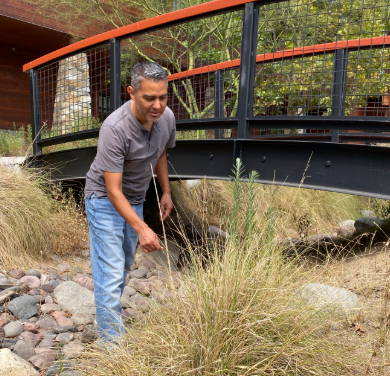
B.S., California State Polytechnic University, Pomona
USDA Forest Service
A forest landscape architect develops and designs recreation sites and outdoor spaces for the Forest Service (e.g., such as campgrounds, picnic areas, trailheads, etc.). We also assess how projects affect the historic and natural scenery in the forest, as well as ensure the implementation of the Architectural Barriers Act throughout facilities and recreation areas.
Organization, creativity, diplomacy, and attention to detail. So many projects involve interdisciplinary teams with various viewpoints, budgets, and sideboards. It takes careful coordination to make everyone feel heard while coming up with a viable and practical design solution that works.
Having to design something for the public to enjoy and use that is also supposed to withstand the test of time. All the site improvements and developments need to fit the natural forest setting aesthetically and need to meet safety and Federal accessibility standards.
I use Autodesk Civil 3D to develop site designs, planting plans, and conceptual drawings that combine with engineering drawings to create construction plans. I also use Adobe Photoshop and Google Earth to create before-and-after simulations.
It was my first project—a very popular picnic area and trailhead on the forest. I was just out of college and wasn’t sure if I was doing the right thing. In the end, I managed to save all the oak trees on the site, reduced the original project costs by 45 percent, and made the site fully accessible.
At my college orientation, they grouped us architects and landscape architects together. When they told us that landscape architects work with plants and design gardens and outdoor spaces, I changed my major on the spot.