Jen Neppl, Assistant District Fire Management Officer
B.S., Murray State University
USDA Forest Service
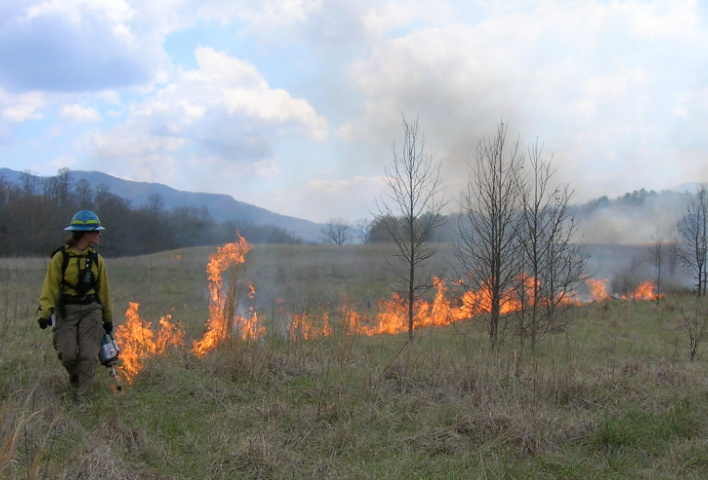
As an assistant district fire management officer, I coordinate the daily operations of six firefighters, including one fire engine and two bulldozers. We respond to local wildfires, and we treat 25,000 acres with prescribed fire in our district each year. We also respond nationally to wildland fires and provide emergency response to all-risk incidents including hurricanes, tornadoes, and floods.
Critical thinking is a key component of the work I do. I may be presented with a wildfire, and I need to figure out how we can put it out, or I am assigned an area of the forest that needs the application of prescribed fire. I have to decide what I need to accomplish the task and how we will do it.
A wildland fire can happen almost anywhere. Firefighters have to find a way to access the fire. We can drive our fire trucks, hike, fly, or even use boats to reach wildland fires.
Weather conditions play an integral role in the management of wildland fires. Every day I monitor weather conditions using Remote Automated Weather Stations (RAWS). There are nearly 2,200 RAWS throughout the country that provide updated hourly weather data to firefighters.
Every fire is different, and I am always learning about fire. Fire teaches me about myself and hard work. Fire teaches me about teamwork, leadership, success, and failure.
In 1999, I was working on the Idaho Panhandle National Forests as a hydrologic technician at a remote duty station in Avery, ID. I completed guard school and responded to wildfires and prescribed fires with the fire crew. After my first fire in an old-growth cedar grove, I was hooked!