FACTivity – Please Join Us for Dinner (Spanish)

SHARE
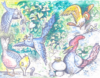
In this FACTivity, you will answer the question: What kinds of physical characteristics might different birds have to help them capture their food? You will answer this question by designing birds to meet different feeding habits.
Materials:
- Blank paper
- Drawing supplies (colored pencils, markers, crayons, etc.)

Part Of
Please Join Us for Dinner: Tropical Birds and Their Temporary Guests (Spanish)
Explore Full Article
SHARE
Standards addressed in this Activity:
The Next Generation Science Standards (NGSS) are a set of K-12 science education standards emphasizing inquiry-based learning, real-world applications, and integrating engineering practices, aiming to deepen understanding of science while promoting critical thinking and problem-solving skills.
-
MS-LS1-5
Construct a scientific explanation based on evidence for how environmental and genetic factors influence the growth of organisms.
-
MS-LS4-4
Construct an explanation based on evidence that describes how genetic variations of traits in a population increase some individuals probability of surviving and reproducing in a specific environment.
The Common Core Standards are educational benchmarks in the United States that outline clear expectations for what students should know and be able to do in English language arts and mathematics from kindergarten through 12th grade, aiming to ensure consistency and coherence in education nationwide.
-
Conduct short research projects to answer a question, drawing on several sources and refocusing the inquiry when appropriate.
-
Gather relevant information from multiple print and digital sources; assess the credibility of each source; and quote or paraphrase the data and conclusions of others while avoiding plagiarism and providing basic bibliographic information for sources.
-
Draw evidence from literary or informational texts to support analysis, reflection, and research.
-
Apply grade 6 Reading standards to literary nonfiction (e.g., "Trace and evaluate the argument and specific claims in a text, distinguishing claims that are supported by reasons and evidence from claims that are not").
-
Conduct short research projects to answer a question, drawing on several sources and generating additional related, focused questions for further research and investigation.
-
Gather relevant information from multiple print and digital sources, using search terms effectively; assess the credibility and accuracy of each source; and quote or paraphrase the data and conclusions of others while avoiding plagiarism and following a standard format for citation.
-
Draw evidence from literary or informational texts to support analysis, reflection, and research.
-
Apply grade 7 Reading standards to literary nonfiction (e.g. "Trace and evaluate the argument and specific claims in a text, assessing whether the reasoning is sound and the evidence is relevant and sufficient to support the claims").
-
Conduct short research projects to answer a question (including a self-generated question), drawing on several sources and generating additional related, focused questions that allow for multiple avenues of exploration.
-
Gather relevant information from multiple print and digital sources, using search terms effectively; assess the credibility and accuracy of each source; and quote or paraphrase the data and conclusions of others while avoiding plagiarism and following a standard format for citation.
-
Draw evidence from literary or informational texts to support analysis, reflection, and research.
-
Apply grade 8 Reading standards to literary nonfiction (e.g., "Delineate and evaluate the argument and specific claims in a text, assessing whether the reasoning is sound and the evidence is relevant and sufficient; recognize when irrelevant evidence is introduced").
Related Resources from the Natural Inquirer
-
 In this FACTivity, you will answer the question: What kinds of physical characteristics might different birds have to help them capture their food? You will answer this question by designing...
FACTivity – Please Join Us for Dinner
In this FACTivity, you will answer the question: What kinds of physical characteristics might different birds have to help them capture their food? You will answer this question by designing...