


Meet Dr. Goodrick! – Spanish
Natural Inquirer Readers for students in grades K-2 focus on a scientist and their research. In this Reader, readers meet Dr. Scott Goodrick who studies weather and wildfires.
$0.00
Highlights
- Meet a Scientist
- Try This! Activity
- Coloring Page
- Glossary
- Critical Thinking Questions
-
 Natural Inquirer Readers for students in grades K-2 focus on a scientist and their research. In this Reader, readers meet Dr. Scott Goodrick who studies weather and wildfires.
Meet Dr. Goodrick! – Spanish
Natural Inquirer Readers for students in grades K-2 focus on a scientist and their research. In this Reader, readers meet Dr. Scott Goodrick who studies weather and wildfires.

-
 Examine the pictures and describe how each would be useful in a fire. Then look around your classroom or home and make a plan for what you would do if...
Try This! – Meet Dr. Goodrick! (Spanish)
Examine the pictures and describe how each would be useful in a fire. Then look around your classroom or home and make a plan for what you would do if... -
 Color in the firefighter bee!
Coloring Page – Meet Dr. Goodrick! (Spanish)
Color in the firefighter bee!

Standards addressed in this Reader:
-
ESS2.D-E1
Scientists record patterns of the weather across different times and areas so that they can make predictions about what kind of weather might happen next.
-
ESS2.D-E2
Climate describes a range of an area’s typical weather conditions and the extent to which those conditions vary over years.
-
ESS2.D-P1
Weather is the combination of Sunlight, wind, snow or rain, and temperature in a particular region at a particular time. People measure these conditions to describe and record the weather and to notice patterns over time.
-
ESS2.E-E1
Living things affect the physical characteristics of their regions.
-
ESS2.E-P1
Plants and animals can change their environment.
-
ESS3.B-E1
A variety of natural hazards result from natural processes. Humans cannot eliminate natural hazards but can take steps to reduce their impacts.
-
ESS3.B-P1
Some kinds of severe weather are more likely than others in a given region. Weather scientists forecast severe weather so that the communities can prepare for and respond to these events.
-
ESS3.C-E1
Human activities in agriculture, industry, and everyday life have had major effects on the land, vegetation, streams, ocean, air, and even outer space. But individuals and communities are doing things to help protect Earth’s resources and environments.
-
ESS3.C-P1
Things that people do to live comfortably can affect the world around them. But they can make choices that reduce their impacts on the land, water, air, and other living things.
-
Ask and answer questions about key details in a text.
-
With prompting and support, read informational texts appropriately complex for grade 1.
-
Identify the main topic and retell key details of a text.
-
Describe the connection between two individuals, events, ideas, or pieces of information in a text.
-
Ask and answer questions to help determine or clarify the meaning of words and phrases in a text.
-
Know and use various text features (e.g., headings, tables of contents, glossaries, electronic menus, icons) to locate key facts or information in a text.
-
Distinguish between information provided by pictures or other illustrations and information provided by the words in a text.
-
Use the illustrations and details in a text to describe its key ideas.
-
Identify the reasons an author gives to support points in a text.
-
Ask and answer such questions as who, what, where, when, why, and how to demonstrate understanding of key details in a text.
-
By the end of year, read and comprehend informational texts, including history/social studies, science, and technical texts, in the grades 2–3 text complexity band proficiently, with scaffolding as needed at the high end of the range.
-
Identify the main topic of a multiparagraph text as well as the focus of specific paragraphs within the text.
-
Describe the connection between a series of historical events, scientific ideas or concepts, or steps in technical procedures in a text.
-
Determine the meaning of words and phrases in a text relevant to a grade 2 topic or subject area.
-
Know and use various text features (e.g., captions, bold print, subheadings, glossaries, indexes, electronic menus, icons) to locate key facts or information in a text efficiently.
-
Identify the main purpose of a text, including what the author wants to answer, explain, or describe.
-
Explain how specific images (e.g., a diagram showing how a machine works) contribute to and clarify a text.
-
Describe how reasons support specific points the author makes in a text.
-
With prompting and support, ask and answer questions about key details in a text.
-
Actively engage in group reading activities with purpose and understanding.
-
With prompting and support, identify the main topic and retell key details of a text.
-
With prompting and support, describe the connection between two individuals, events, ideas, or pieces of information in a text.
-
With prompting and support, ask and answer questions about unknown words in a text.
-
Identify the front cover, back cover, and title page of a book.
-
Name the author and illustrator of a text and define the role of each in presenting the ideas or information in a text.
-
With prompting and support, describe the relationship between illustrations and the text in which they appear (e.g., what person, place, thing, or idea in the text an illustration depicts).
-
With prompting and support, identify the reasons an author gives to support points in a text.
-
Write informative/explanatory texts in which they name a topic, supply some facts about the topic, and provide some sense of closure.
-
With guidance and support from adults, recall information from experiences or gather information from provided sources to answer a question.
-
With guidance and support from adults and peers, focus on a topic and strengthen writing as needed by revising and editing.
-
Recall information from experiences or gather information from provided sources to answer a question.
-
People, Places, and Environments
-
Science, Technology, and Society
-
Time, Continuity, and Change
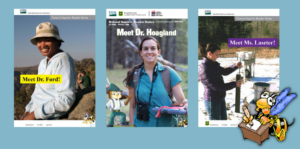
Welcome to the Educator Guide for the Natural Inquirer Reader series! Natural Inquirer Readers are written for a K-2 audience. Some of the Readers focus on a scientist and what they study and other Readers focus on a specific topic. In this guide, you will learn about the different parts of the Reader and ideas for using the Reader in a classroom setting.
-
Parts of a Reader
During kindergarten through 2nd grade, young readers learn about parts of a nonfiction text such as title, table of contents, glossary and bold words.
-
Every Natural Inquirer Reader begins with a Table of Contents where students can preview what is coming in the Reader.
-
The actual text of the Reader begins after the Table of Contents. Throughout this text, there are captions, bolded glossary words, and other text features for the students to experience.
- To learn more about the specifics, read the Natural Inquirer blog Reader Strategy 2: Elements of Nonfiction – Natural Inquirer.
- A great introduction to this topic is Reader Strategy 1: Fiction and Nonfiction – Natural Inquirer.
-
At the conclusion of the main text in the Reader, there are a few critical thinking questions for the students to answer.
-
Next, is the glossary and then an activity. Each Reader is formatted in the same way.
Lesson Plans
Check out the great lesson plans we have to use with the Readers!

Lesson Plan – What Is a Scientist? Lesson Map (Reader Strategies Series)

Lesson Plan – Elements of Nonfiction Lesson Map (Reader Strategies Series)

Lesson Plan – Fiction and Nonfiction Lesson Map (Reader Strategies Series)

Lesson Plan – Reader BINGO
Video Read-Alongs and Audio Books
Also check out one of the newest features for our youngest learners! The video includes read-along text that boldfaces as the narrator reads. A helpful guide introduces new words that are highlighted in yellow. These videos are also available in an audio book format – perfect for listening centers!

Meet Smokey Bear’s Team – Video Read-Along
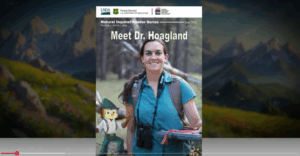
Meet Dr. Hoagland – Video Read-Along
Lessons
-
In this lesson, students play bingo while becoming acquainted with sight words from the Natural Inquirer Reader Series. Materials: Natural Inquirer Reader Series (choose one Reader for each day you...
Lesson Plan – Reader BINGO
In this lesson, students play bingo while becoming acquainted with sight words from the Natural Inquirer Reader Series. Materials: Natural Inquirer Reader Series (choose one Reader for each day you... -
 In this lesson plan, you will use the visual thinking strategy to elicit prior knowledge from students before reading a Natural Inquirer Reader. After reading the article, you will use...
Lesson Plan – Visual Thinking Strategy and Picture Description Strategy
In this lesson plan, you will use the visual thinking strategy to elicit prior knowledge from students before reading a Natural Inquirer Reader. After reading the article, you will use... -
 Use the “Take Two” strategy to encourage students to share their personal experiences and outside knowledge regarding topics presented in the text. This lesson plan can be used with any...
Lesson Plan – Take Two
Use the “Take Two” strategy to encourage students to share their personal experiences and outside knowledge regarding topics presented in the text. This lesson plan can be used with any... -
 Get students moving and listening closely by using “pop ups.” Assign students words from a text, and as you read, students “pop up” (jump out of their seat, then sit...
Lesson Plan – Pop ups
Get students moving and listening closely by using “pop ups.” Assign students words from a text, and as you read, students “pop up” (jump out of their seat, then sit... -
 Use the Observations-Wonderings-Learnings (OWL) graphic organizer to connect students to a topic and draw out prior knowledge and questions for future exploration. This lesson plan can be used with any...
Lesson Plan – OWL
Use the Observations-Wonderings-Learnings (OWL) graphic organizer to connect students to a topic and draw out prior knowledge and questions for future exploration. This lesson plan can be used with any... -
 Gauge students’ prior knowledge and knowledge gain by doing true/false questions before and after a Reader. Materials: A Natural Inquirer Reader The anticipation guide that corresponds to your chosen Reader...
Lesson Plan – Anticipation Guide
Gauge students’ prior knowledge and knowledge gain by doing true/false questions before and after a Reader. Materials: A Natural Inquirer Reader The anticipation guide that corresponds to your chosen Reader...
Glossary
View All Glossary-

Scott Goodrick
My favorite discovery is that the atmosphere connects all parts of the globe. Colder than normal ocean temperatures along the equator in the Pacific Ocean can change weather patterns over...View Profile
Related Resources from The Natural Inquirer
-
 Natural Inquirer Readers for students in grades K-2 focus on a scientist and their research. In this Reader, readers meet Dr. Scott Goodrick who studies weather and wildfires.
Meet Dr. Goodrick! – Vol. 1 No. 5
Natural Inquirer Readers for students in grades K-2 focus on a scientist and their research. In this Reader, readers meet Dr. Scott Goodrick who studies weather and wildfires. -
 Natural Inquirer Readers for students in grades K-2 focus on a scientist and their research. In this Reader, students meet Dr. Becky Flitcroft who studies Coho salmon.
Meet Dr. Flitcroft – Spanish
Natural Inquirer Readers for students in grades K-2 focus on a scientist and their research. In this Reader, students meet Dr. Becky Flitcroft who studies Coho salmon. -
 Natural Inquirer Readers for students in grades K-2 focus on a scientist and their research. In this Reader, students meet Dr. Paulette Ford who studies prairie dogs and fire.
Meet Dr. Ford – Spanish
Natural Inquirer Readers for students in grades K-2 focus on a scientist and their research. In this Reader, students meet Dr. Paulette Ford who studies prairie dogs and fire. -
 Natural Inquirer Readers for students in grades K-2 focus on a scientist and their research. In this Reader, students meet Dr. Qinfeng Guo who studies animals and their movement to...
Meet Dr. Guo! – Spanish
Natural Inquirer Readers for students in grades K-2 focus on a scientist and their research. In this Reader, students meet Dr. Qinfeng Guo who studies animals and their movement to... -
 Natural Inquirer Readers for students in grades K-2 focus on a scientist and their research. In this Reader, students meet Dr. Evan Mercer who compares climate in rural and urban...
Meet Dr. Mercer – Spanish
Natural Inquirer Readers for students in grades K-2 focus on a scientist and their research. In this Reader, students meet Dr. Evan Mercer who compares climate in rural and urban... -
 Natural Inquirer Readers for students in grades K-2 focus on a scientist and their research. In this Reader, students meet Dr. Lara Roman who studies urban trees.
Meet Dr. Roman – Spanish
Natural Inquirer Readers for students in grades K-2 focus on a scientist and their research. In this Reader, students meet Dr. Lara Roman who studies urban trees. -
 Natural Inquirer Readers for students in grades K-2 focus on a scientist and their research. In this Reader, readers meet Stephanie Laseter who studies how rainfall affects streams and rivers...
Meet Ms. Laseter! – Spanish
Natural Inquirer Readers for students in grades K-2 focus on a scientist and their research. In this Reader, readers meet Stephanie Laseter who studies how rainfall affects streams and rivers... -
 Natural Inquirer Readers for students in grades K-2 focus on a scientist and their research. In this Reader, students meet Dr. Evan Mercer who compares climate in rural and urban...
Meet Dr. Mercer! – Spanish
Natural Inquirer Readers for students in grades K-2 focus on a scientist and their research. In this Reader, students meet Dr. Evan Mercer who compares climate in rural and urban... -
 Natural Inquirer Readers for students in grades K-2 focus on a scientist and their research. In this Reader, readers meet Dr. Ge Sun who studies land use in the Southern...
Meet Dr. Sun! – Spanish
Natural Inquirer Readers for students in grades K-2 focus on a scientist and their research. In this Reader, readers meet Dr. Ge Sun who studies land use in the Southern...
