Natural Inquirer - Homepage

Free Science Materials for K-12 Students

  • Bookmarks
  • Account
  • USDA
  • USDA Forest Service logo.
Natural Inquirer - Homepage
  • About
    • About Natural Inquirer
    • Team
    • Partners
    • Press & Past Events
    • Contact Us
  • Resources
    • View All Resources
    • Grade Levels
      • PreK - 2nd Grade
      • Upper Elementary
      • Middle School
      • High School
      • All Grade Levels
    • Resource Types
      • Articles
      • Activities
      • Collector Cards
      • Coloring Pages
      • Videos
      • Lesson Plans
      • Scientists & Collaborators
      • Spotlights
      • Virtual Learning Adventures
      • All Types
    • Resource Topics
      • Wilderness
      • Wildlife
      • Water
      • Active Forest Management
      • Social Science
      • Fire
      • Agriculture
      • Recreation
      • Carbon
      • Insects
      • All Topics
    • Special Collections
      • Artemis Moon Trees
      • Career Exploration
      • Experimental Forests & Ranges
      • Project Learning Tree Connections
      • Globe Connections
      • Designing Your Own Study
      • Smokey Bear
      • Spanish Editions
      • Woodsy Owl
      • Virtual Learning Adventures
      • World's Forests
      • All Special Collections
  • Order Materials
    • View All Products
    • Journals & Monographs
    • Readers
    • Collector Card Packs
    • Coloring Books
  • Educators
    • For Educators
      • Educator Guide
      • Educator Blog
      • Newsletter
    • Classroom Ready Resources
      • Activities
      • Career Exploration
      • Lesson Plans
      • Learning Modules
      • GLOBE Connections
      • Project Learning Tree
    • Get Involved
      • Volunteer Your Classroom
  • Career Exploration
  • Bookmarks
  • Account
  • About
    • About Natural Inquirer
    • Team
    • Partners
    • Press & Past Events
    • Contact
  • Resources
        • View All Resources
        • By Grade
          • PreK - 2nd
          • Upper Elementary
          • Middle School
          • High School
        • By Type
          • Articles
          • Activities
          • Collector Cards
          • Coloring Pages
          • Videos
          • Lesson Plans
          • Learning Modules
          • Journals
          • Monographs
          • Readers
          • Scientists & Collaborators
          • Spotlights
          • Virtual Learning Adventures
          • All Types
        • By Topic
          • Agriculture
          • Active Forest Management
          • Carbon
          • Fire
          • Grasslands
          • Insects
          • Recreation
          • Social Science
          • Water
          • Wilderness
          • Wildlife
          • All Topics
        • Special Collections
          • Artemis Moon Trees
          • Career Exploration
          • Experimental Forests and Ranges
          • GLOBE Connections
          • Project Learning Tree Connections
          • Designing Your Own Study
          • Smokey Bear
          • Spanish Editions
          • Virtual Learning Adventures
          • Woodsy Owl
          • World's Forests
          • All Special Collections
  • Order Materials
        • Download all resources - FREE!

          We will be pausing our services beginning September 25, 2026. We are waiting on a new agreement to be put in a place and are hopeful this pause will be temporary. The website will be available during this time to download and use materials; however, we will not be able to mail hard copies of materials or provide customer support during this time. If you have any questions or concerns about the program, please email SM.FS.RDPublicWeb@usda.gov. We have enjoyed serving you and hope to be able to do so again in the near future.

          View All Products
        • Journals & Monographs

          Journals focus on a group of related articles, while monographs focus on one research article.

          Journals & Monographs
        • Collector Cards

          Learn about possible career opportunities in science!

          View All Card Packs
        • Readers

          For a PreK-2nd grade audience, each Reader focuses on one Forest Service scientist and their research.

          View All Readers
        • Coloring and Activity Books

          Learn more about science through our coloring and outdoor activity books!

          View All Coloring and Activity Books
  • Educators
        • Overview
          • General Educator Guide
          • PreK-2nd Grade Guide
          • Upper Elementary School Guide
          • Middle and High School Guide
          • Non-Formal Education Guide
        • Classroom Ready Resources
          • Career Exploration
          • Learning Modules
          • Lesson Plans
          • Explore All
        • Order Materials
          • View All Free Products
          • Contact Us
        • For Educators
          • Educator Blog
          • Newsletter
          • Project Learning Tree
        • Get Involved
          • Volunteer Your Classroom
  • Career Exploration
  • Home
  • Products
  • Meet Dr. Flitcroft – Spanish
Cover of Meet Dr. Flitcroft Spanish version
Bookmark
Please login to bookmark Close

Please login to bookmark


Lost your password?

No account yet? Register

Meet Dr. Flitcroft – Spanish

  • Reader
  • PreK - 2nd
  • Water
  • Wildlife
  • Habitat
  • Life cycle
  • Rivers and Streams
  • Salmon
Cover of Meet Dr. Flitcroft Spanish version
SHARE
  • Copy Link
  • Facebook
  • X (Twitter)
  • Pinterest
  • Email
  • Google Classroom

Natural Inquirer Readers for students in grades K-2 focus on a scientist and their research. In this Reader, students meet Dr. Becky Flitcroft who studies Coho salmon.

$0.00

SHARE
  • Copy Link
  • Facebook
  • X (Twitter)
  • Pinterest
  • Email
  • Google Classroom

Highlights

  • Meet a Scientist
  • Try This! Activity
  • Glossary
  • Critical Thinking Questions
  • Pdf preview of the Meet Dr. Flitcroft article in spanish
    Natural Inquirer Readers for students in grades K-2 focus on a scientist and their research. In this Reader, students meet Dr. Becky Flitcroft who studies Coho salmon.

    Meet Dr. Flitcroft! – Spanish

    • Article
    • PreK - 2nd
    • Less than 30 minutes
    • Water
    • Wildlife
    • Habitat
    • Life cycle
    • Rivers and Streams
    • Salmon
    Natural Inquirer Readers for students in grades K-2 focus on a scientist and their research. In this Reader, students meet Dr. Becky Flitcroft who studies Coho salmon.
    • Explore Article
    • Download Article (PDF)
    • Explore Article
    • Download Article (PDF)

    Part Of

    Meet Dr. Flitcroft - Spanish

  • PDF preview of the activity from Meet Dr. Flitcroft
    Examine the map of streams and rivers where young salmon live. Count the streams and rivers and find which ones would be good places for young salmon to live.

    Try This! – Meet Dr. Flitcroft! (Spanish)

    • Activity
    • PreK - 2nd
    • Less than 30 minutes
    • Water
    • Wildlife
    • Habitat
    • Map
    • Rivers and Streams
    • Salmon
    Examine the map of streams and rivers where young salmon live. Count the streams and rivers and find which ones would be good places for young salmon to live.
    • Explore Activity
    • Download Activity (PDF)
    • Explore Activity
    • Download Activity (PDF)

    Part Of

    Meet Dr. Flitcroft - Spanish

Jump To

  • Education Standards
  • Educator Guide
  • Lesson Plans

Standards addressed in this Reader:

The Next Generation Science Standards (NGSS) are a set of K-12 science education standards emphasizing inquiry-based learning, real-world applications, and integrating engineering practices, aiming to deepen understanding of science while promoting critical thinking and problem-solving skills.
  • 1-LS1-2
    Read texts and use media to determine patterns in behavior of parents and offspring that help offspring survive.
  • ESS2.B-P1
    Maps show where things are located. One can map the shapes and kinds of land and water in any area.
  • ESS2.C-P1
    Water is found in the ocean, rivers, lakes, and ponds. Water exists as solid ice and in liquid form.
  • ESS3.A-E1
    Energy and fuels that humans use are derived from natural sources, and their use affects the environment in multiple ways. Some resources are renewable over time, and others are not.
  • ESS3.A-P1
    Living things need water, air, and resources from the land, and they live in places that have the things they need. Humans use natural resources for everything they do.
  • K-ESS3-1
    Use a model to represent the relationship between the needs of different plants or animals (including humans) and the places they live.
  • K-LS1-1
    Use observations to describe patterns of what plants and animals (including humans) need to survive.
  • LS1.B-E1
    Reproduction is essential to the continued existence of every kind of organism. Plants and animals have unique and diverse life cycles.
  • LS1.B-P1
    Adult plants and animals can have young. In many kinds of animals, parents and the offspring themselves engage in behaviors that help the offspring to survive.
  • LS1.C-E1
    Food provides animals with the materials they need for body repair and growth and the energy they need to maintain body warmth and for motion.
  • LS1.C-P1
    All animals need food in order to live and grow. They obtain their food from plants or from other animals. Plants need water and light to live and grow.
  • LS2.A-E1
    The food of almost any kind of animal can be traced back to plants. Organisms are related in food webs in which some animals eat plants for food and other animals eat the animals that eat plants. Some organisms, such as fungi and bacteria, break down dead organisms (both plants or plant parts and animals) and therefore operate as “decomposers.” Decomposition eventually restores (recycles) some materials back to the soil. Organisms can survive only in environments in which their particular needs are met. A healthy ecosystem is one in which multiple species of different types are each able to meet their needs in a relatively stable web of life. Newly introduced species can damage the balance of an ecosystem.
  • LS2.C-E1
    When the environment changes in ways that affect a place’s physical characteristics, temperature, or availability of resources, some organisms survive and reproduce, others move to new locations, yet others move into the transformed environment, and some die.
  • LS4.C-E1
    For any particular environment, some kinds of organisms survive well, some survive less well, and some cannot survive at all.
  • LS4.D-E1
    Populations live in a variety of habitats, and change in those habitats affects the organisms living there.
  • LS4.D-P1
    There are many different kinds of living things in any area, and they exist in different places on land and in water.
The Common Core Standards are educational benchmarks in the United States that outline clear expectations for what students should know and be able to do in English language arts and mathematics from kindergarten through 12th grade, aiming to ensure consistency and coherence in education nationwide.
  • Ask and answer questions about key details in a text.
  • With prompting and support, read informational texts appropriately complex for grade 1.
  • Identify the main topic and retell key details of a text.
  • Describe the connection between two individuals, events, ideas, or pieces of information in a text.
  • Ask and answer questions to help determine or clarify the meaning of words and phrases in a text.
  • Know and use various text features (e.g., headings, tables of contents, glossaries, electronic menus, icons) to locate key facts or information in a text.
  • Distinguish between information provided by pictures or other illustrations and information provided by the words in a text.
  • Use the illustrations and details in a text to describe its key ideas.
  • Identify the reasons an author gives to support points in a text.
  • Ask and answer such questions as who, what, where, when, why, and how to demonstrate understanding of key details in a text.
  • By the end of year, read and comprehend informational texts, including history/social studies, science, and technical texts, in the grades 2–3 text complexity band proficiently, with scaffolding as needed at the high end of the range.
  • Identify the main topic of a multiparagraph text as well as the focus of specific paragraphs within the text.
  • Describe the connection between a series of historical events, scientific ideas or concepts, or steps in technical procedures in a text.
  • Determine the meaning of words and phrases in a text relevant to a grade 2 topic or subject area.
  • Know and use various text features (e.g., captions, bold print, subheadings, glossaries, indexes, electronic menus, icons) to locate key facts or information in a text efficiently.
  • Identify the main purpose of a text, including what the author wants to answer, explain, or describe.
  • Explain how specific images (e.g., a diagram showing how a machine works) contribute to and clarify a text.
  • Describe how reasons support specific points the author makes in a text.
  • With prompting and support, ask and answer questions about key details in a text.
  • Actively engage in group reading activities with purpose and understanding.
  • With prompting and support, identify the main topic and retell key details of a text.
  • With prompting and support, describe the connection between two individuals, events, ideas, or pieces of information in a text.
  • With prompting and support, ask and answer questions about unknown words in a text.
  • Identify the front cover, back cover, and title page of a book.
  • Name the author and illustrator of a text and define the role of each in presenting the ideas or information in a text.
  • With prompting and support, describe the relationship between illustrations and the text in which they appear (e.g., what person, place, thing, or idea in the text an illustration depicts).
  • With prompting and support, identify the reasons an author gives to support points in a text.
Social Studies Standards are educational guidelines outlining the essential knowledge, skills, and concepts students should learn in subjects such as history, geography, civics, and economics, aiming to provide a comprehensive understanding of societal structures, historical events, and global perspectives.
  • People, Places, and Environments
  • Science, Technology, and Society
  • Time, Continuity, and Change

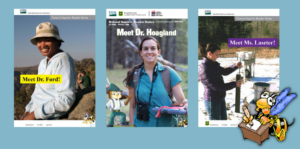
A graphic featuring the cover of Meet Dr. Ford, Meet Dr. Hoagland, and Meet Ms. Laseter. Also features a small cartoon bee writing oat a desk.


Welcome to the Educator Guide for the Natural Inquirer Reader series! Natural Inquirer Readers are written for a K-2 audience. Some of the Readers focus on a scientist and what they study and other Readers focus on a specific topic. In this guide, you will learn about the different parts of the Reader and ideas for using the Reader in a classroom setting.


  1. Parts of a Reader

    During kindergarten through 2nd grade, young readers learn about parts of a nonfiction text such as title, table of contents, glossary and bold words.

  2. Every Natural Inquirer Reader begins with a Table of Contents where students can preview what is coming in the Reader.

  3. The actual text of the Reader begins after the Table of Contents. Throughout this text, there are captions, bolded glossary words, and other text features for the students to experience.

    • To learn more about the specifics, read the Natural Inquirer blog Reader Strategy 2: Elements of Nonfiction – Natural Inquirer.
    • A great introduction to this topic is Reader Strategy 1: Fiction and Nonfiction – Natural Inquirer.
  4. At the conclusion of the main text in the Reader, there are a few critical thinking questions for the students to answer.

  5. Next, is the glossary and then an activity. Each Reader is formatted in the same way.


Lesson Plans

Check out the great lesson plans we have to use with the Readers!

Explore All Lesson Plans
PDF preview of the first page of the What Is a Scientist? Lesson Map

Lesson Plan – What Is a Scientist? Lesson Map (Reader Strategies Series)

  • Lesson Plan
  • PreK - 2nd
  • 1 Classroom Period
  • Analyze
  • Anchor Chart
  • Early Readers
  • Graphic Organizer
  • Nonfiction
  • Observe
  • Reading Strategies
  • Science
  • Scientific Method
  • Scientist
In this lesson plan, students will use clues from Natural Inquirer Readers to determine what makes…
PDF preview of the Elements of Nonfiction Lesson Map

Lesson Plan – Elements of Nonfiction Lesson Map (Reader Strategies Series)

  • Lesson Plan
  • PreK - 2nd
  • 1 Classroom Period
  • Analyze
  • Anchor Chart
  • Categorize
  • Early Readers
  • Graphic Organizer
  • Nonfiction
  • Reading Strategies
In this lesson plan, students will examine some of our Readers to identify features of…
PDF preview of the Fiction and Nonfiction Lesson Map

Lesson Plan – Fiction and Nonfiction Lesson Map (Reader Strategies Series)

  • Lesson Plan
  • PreK - 2nd
  • 1 Classroom Period
  • Categorize
  • Compare and Contrast
  • Early Readers
  • Fiction
  • Nonfiction
  • Reading Strategies
  • Venn Diagram
In this lesson plan, students will explore the differences between fiction and nonfiction using a…
PDF preview of the Bingo Sight Words Lesson Plan

Lesson Plan – Reader BINGO

  • Lesson Plan
  • PreK - 2nd
  • 1 Classroom Period
  • 2-3 Classroom Periods
  • 5 Classroom Periods
  • Early Reader
  • Sight Words
  • Vocabulary
In this lesson, students play bingo while becoming acquainted with sight words from the Natural…

Video Read-Alongs and Audio Books

Also check out one of the newest features for our youngest learners! The video includes read-along text that boldfaces as the narrator reads. A helpful guide introduces new words that are highlighted in yellow. These videos are also available in an audio book format – perfect for listening centers!

Meet Smokey Bear's Team Audiobook Meet Dr. Hoagland Audiobook
A thumbnail for Meet Smokey Bear's Team YouTube video

Meet Smokey Bear’s Team – Video Read-Along
  • Video
  • PreK - 2nd
  • Less than 30 minutes
  • Fire
  • Ecosystem
  • Fuels
  • Prescribed Fire
  • Wildfire Detection
  • Wildfire Prevention
  • Wildfire Prevention Education
Watch the video read-along of “Meet Smokey Bear’s Team!” Meet Smokey and some of the…
YouTube thumbnail featuring the Meet Dr. Hoagland reader cover

Meet Dr. Hoagland – Video Read-Along

  • Video
  • PreK - 2nd
  • Less than 30 minutes
  • Fire
  • Wildlife
  • Habitat
  • Laguna Pueblo
  • Landsat
  • Mexican Spotted Owl
Watch the video read-along of “Meet Dr. Hoagland!” Meet Dr. Hoagland, a biological scientist and…

Lessons

  • PDF preview of the Bingo Sight Words Lesson Plan
    In this lesson, students play bingo while becoming acquainted with sight words from the Natural Inquirer Reader Series. Materials: Natural Inquirer Reader Series (choose one Reader for each day you...

    Lesson Plan – Reader BINGO

    • Lesson Plan
    • PreK - 2nd
    • 1 Classroom Period
    • 2-3 Classroom Periods
    • 5 Classroom Periods
    • Early Reader
    • Sight Words
    • Vocabulary
    In this lesson, students play bingo while becoming acquainted with sight words from the Natural Inquirer Reader Series. Materials: Natural Inquirer Reader Series (choose one Reader for each day you...
    • Explore Lesson Plan
    • Download Lesson Plan (PDF)
    • Explore Lesson Plan
    • Download Lesson Plan (PDF)
  • PDF Preview of the Visual Thinking Strategy Lesson Plan
    In this lesson plan, you will use the visual thinking strategy to elicit prior knowledge from students before reading a Natural Inquirer Reader. After reading the article, you will use...

    Lesson Plan – Visual Thinking Strategy and Picture Description Strategy

    • Lesson Plan
    • PreK - 2nd
    • 2-3 Classroom Periods
    • Active Forest Management
    • Fire
    • Social Science
    • Water
    • Wilderness
    • Wildlife
    • Group Discussion
    • Interpreting Text
    • Making Meaning
    • Reading for Information
    • Reading strategy
    • Visual Thinking Strategy
    In this lesson plan, you will use the visual thinking strategy to elicit prior knowledge from students before reading a Natural Inquirer Reader. After reading the article, you will use...
    • Explore Lesson Plan
    • Download Lesson Plan (PDF)
    • Explore Lesson Plan
    • Download Lesson Plan (PDF)
  • PDF Preview of the Take Two Lesson Plan
    Use the “Take Two” strategy to encourage students to share their personal experiences and outside knowledge regarding topics presented in the text. This lesson plan can be used with any...

    Lesson Plan – Take Two

    • Lesson Plan
    • PreK - 2nd
    • 1 Classroom Period
    • Active Forest Management
    • Fire
    • Social Science
    • Water
    • Wilderness
    • Wildlife
    • Group Activity
    • Personal Connections
    • Reading for Information
    • Reflection
    Use the “Take Two” strategy to encourage students to share their personal experiences and outside knowledge regarding topics presented in the text. This lesson plan can be used with any...
    • Explore Lesson Plan
    • Download Lesson Plan (PDF)
    • Explore Lesson Plan
    • Download Lesson Plan (PDF)
  • PDF preview of the Pop-Ups Lesson Plan
    Get students moving and listening closely by using “pop ups.” Assign students words from a text, and as you read, students “pop up” (jump out of their seat, then sit...

    Lesson Plan – Pop ups

    • Lesson Plan
    • PreK - 2nd
    • 1 Classroom Period
    • Active Forest Management
    • Fire
    • Social Science
    • Water
    • Wilderness
    • Wildlife
    • Active Reading
    • Activity
    • Guided reading
    • Reading for Information
    • Reading strategy
    Get students moving and listening closely by using “pop ups.” Assign students words from a text, and as you read, students “pop up” (jump out of their seat, then sit...
    • Explore Lesson Plan
    • Download Lesson Plan (PDF)
    • Explore Lesson Plan
    • Download Lesson Plan (PDF)
  • PDF Preview of the OWL Lesson Plan
    Use the Observations-Wonderings-Learnings (OWL) graphic organizer to connect students to a topic and draw out prior knowledge and questions for future exploration. This lesson plan can be used with any...

    Lesson Plan – OWL

    • Lesson Plan
    • PreK - 2nd
    • 2-3 Classroom Periods
    • Active Forest Management
    • Fire
    • Social Science
    • Water
    • Wilderness
    • Wildlife
    • Graphic Organizer
    • Guided reading
    • Observation
    • Reading for Information
    • Reflection
    Use the Observations-Wonderings-Learnings (OWL) graphic organizer to connect students to a topic and draw out prior knowledge and questions for future exploration. This lesson plan can be used with any...
    • Explore Lesson Plan
    • Download Lesson Plan (PDF)
    • Explore Lesson Plan
    • Download Lesson Plan (PDF)
  • PDF Preview of the Anticipation Guide Lesson Plan
    Gauge students’ prior knowledge and knowledge gain by doing true/false questions before and after a Reader. Materials: A Natural Inquirer Reader The anticipation guide that corresponds to your chosen Reader...

    Lesson Plan – Anticipation Guide

    • Lesson Plan
    • PreK - 2nd
    • 2-3 Classroom Periods
    • Active Forest Management
    • Agriculture
    • Fire
    • Water
    • Wildlife
    • Assessment
    • Guided reading
    Gauge students’ prior knowledge and knowledge gain by doing true/false questions before and after a Reader. Materials: A Natural Inquirer Reader The anticipation guide that corresponds to your chosen Reader...
    • Explore Lesson Plan
    • Download Lesson Plan (PDF)
    • Explore Lesson Plan
    • Download Lesson Plan (PDF)

Glossary

View All Glossary
  • Alaska Native

    (ə la skə nā tiv): A person who is part of the first communities that lived or still live in Alaska.

  • American Indian

    (ə mer ə kən in dē ən): A person who is part of the first communities that lived or still live in North America or South America.

  • develop

    (di vel әp): To grow or change.

  • environment

    (in vī rә(n) mәnt): The surroundings where a person, plant, or animal lives; the living and nonliving things that are a part of the natural world.

  • habitat

    (ha bә tat): The place where an animal or plant normally lives or grows.

  • life cycle

    (līf sī kәl): Stages in the life of a plant or animal.

  • observe

    (әb zәrv): To watch something.

  • pattern

    (pa tәrn): Something that happens in a regular or repeated way.

  • salmon

    (sa mәn): A large fish that is born in streams or rivers but that lives most of its life in the ocean.

  • stream

    (strēm): A body of running water—such as a river, creek, or brook—flowing on Earth.

View All Classrooms
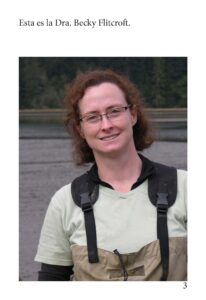
  • Dr. Flitcroft wearing waders and standing by a body of water.

    Becky Flitcroft

    Ichthyologist

    I am currently conducting research on Coho salmon populations throughout their life cycle I try to understand what fish need, from the perspective of the fish. We often think about...
    View Profile

Related Resources from The Natural Inquirer

  • Dr. Flitcroft in front of water
    Natural Inquirer Readers for students in grades K-2 focus on a scientist and their research. In this Reader, students meet Dr. Becky Flitcroft who studies Coho salmon.

    Meet Dr. Flitcroft! – Vol. 1 No. 7

    • Reader
    • PreK - 2nd
    • Water
    • Wildlife
    • Habitat
    • Life cycle
    • Rivers and Streams
    • Salmon
    Natural Inquirer Readers for students in grades K-2 focus on a scientist and their research. In this Reader, students meet Dr. Becky Flitcroft who studies Coho salmon.
    • Explore Reader
    • Download Issue (PDF)
    • Descargar Artículo (PDF)
    • Explore Reader
    • Download Issue (PDF)
    • Descargar Artículo (PDF)
  • Meet Dr. Ford Spanish version cover
    Natural Inquirer Readers for students in grades K-2 focus on a scientist and their research. In this Reader, students meet Dr. Paulette Ford who studies prairie dogs and fire.

    Meet Dr. Ford – Spanish

    • Reader
    • PreK - 2nd
    • Fire
    • Grasslands
    • Wildlife
    • Habitat
    • Prairie Dog
    • Prairie Ecosystem
    • Prairie Fire
    Natural Inquirer Readers for students in grades K-2 focus on a scientist and their research. In this Reader, students meet Dr. Paulette Ford who studies prairie dogs and fire.
    • Explore Reader
    • Descargar Artículo (PDF)
    • Download Reader (PDF)
    • Explore Reader
    • Descargar Artículo (PDF)
    • Download Reader (PDF)
  • Cover of Meet Dr. Mercer Spanish version
    Natural Inquirer Readers for students in grades K-2 focus on a scientist and their research. In this Reader, students meet Dr. Evan Mercer who compares climate in rural and urban...

    Meet Dr. Mercer – Spanish

    • Reader
    • PreK - 2nd
    • Climate Change
    • Rural Communities
    • Urban Communities
    • Weather
    Natural Inquirer Readers for students in grades K-2 focus on a scientist and their research. In this Reader, students meet Dr. Evan Mercer who compares climate in rural and urban...
    • Explore Reader
    • Descargar Artículo (PDF)
    • Download Reader (PDF)
    • Explore Reader
    • Descargar Artículo (PDF)
    • Download Reader (PDF)
  • Cover of Meet Dr. Guo Spanish version
    Natural Inquirer Readers for students in grades K-2 focus on a scientist and their research. In this Reader, students meet Dr. Qinfeng Guo who studies animals and their movement to...

    Meet Dr. Guo! – Spanish

    • Reader
    • PreK - 2nd
    • Wildlife
    • Climate
    • Habitat
    • Native Species
    • Nonnative Species
    Natural Inquirer Readers for students in grades K-2 focus on a scientist and their research. In this Reader, students meet Dr. Qinfeng Guo who studies animals and their movement to...
    • Explore Reader
    • Descargar Artículo (PDF)
    • Download Reader (PDF)
    • Explore Reader
    • Descargar Artículo (PDF)
    • Download Reader (PDF)
  • Cover of the Meet Dr. Roman Spanish edition
    Natural Inquirer Readers for students in grades K-2 focus on a scientist and their research. In this Reader, students meet Dr. Lara Roman who studies urban trees.

    Meet Dr. Roman – Spanish

    • Reader
    • PreK - 2nd
    • Pollution
    • Rural
    • Urban
    • Urban trees
    Natural Inquirer Readers for students in grades K-2 focus on a scientist and their research. In this Reader, students meet Dr. Lara Roman who studies urban trees.
    • Explore Reader
    • Descargar Artículo (PDF)
    • Download Reader (PDF)
    • Explore Reader
    • Descargar Artículo (PDF)
    • Download Reader (PDF)
  • Meet Dr. Goodrick cover in Spanish
    Natural Inquirer Readers for students in grades K-2 focus on a scientist and their research. In this Reader, readers meet Dr. Scott Goodrick who studies weather and wildfires.

    Meet Dr. Goodrick! – Spanish

    • Reader
    • PreK - 2nd
    • Active Forest Management
    • Fire
    • Climate
    • Climate Change
    • Fire
    • Fire Prevention
    • Weather
    • Wildfire
    • Wildfire Safety
    Natural Inquirer Readers for students in grades K-2 focus on a scientist and their research. In this Reader, readers meet Dr. Scott Goodrick who studies weather and wildfires.
    • Explore Reader
    • Descargar Artículo (PDF)
    • Download Reader (PDF)
    • Explore Reader
    • Descargar Artículo (PDF)
    • Download Reader (PDF)
  • Cover of Meet Dr. Sun Spanish version
    Natural Inquirer Readers for students in grades K-2 focus on a scientist and their research. In this Reader, readers meet Dr. Ge Sun who studies land use in the Southern...

    Meet Dr. Sun! – Spanish

    • Reader
    • PreK - 2nd
    • Human Impacts
    • Land Use
    • Water Cycle
    Natural Inquirer Readers for students in grades K-2 focus on a scientist and their research. In this Reader, readers meet Dr. Ge Sun who studies land use in the Southern...
    • Explore Reader
    • Descargar Artículo (PDF)
    • Download Reader (PDF)
    • Explore Reader
    • Descargar Artículo (PDF)
    • Download Reader (PDF)
  • Cover of Meet Ms. Laseter Spanish version
    Natural Inquirer Readers for students in grades K-2 focus on a scientist and their research. In this Reader, readers meet Stephanie Laseter who studies how rainfall affects streams and rivers...

    Meet Ms. Laseter! – Spanish

    • Reader
    • PreK - 2nd
    • Water
    • Forests
    • Precipitation
    • Streams
    • Water Cycle
    Natural Inquirer Readers for students in grades K-2 focus on a scientist and their research. In this Reader, readers meet Stephanie Laseter who studies how rainfall affects streams and rivers...
    • Explore Reader
    • Descargar Artículo (PDF)
    • Download Reader (PDF)
    • Explore Reader
    • Descargar Artículo (PDF)
    • Download Reader (PDF)
Back to Top
  • Natural Inquirer - Homepage
  • USDA
  • USDA Forest Service logo.

The Natural Inquirer program produces a variety of science education materials for PreK through grade 12. Natural Inquirer products are produced by the USDA Forest Service and other cooperators and partners.

Please enable JavaScript in your browser to complete this form.
* denotes mandatory fields
Loading
  • Facebook
  • Pinterest
  • X, formerly Twitter
  • YouTube
  • About Natural Inquirer
  • Team
  • Partners
  • Press & Past Events
  • Contact Us
  • Accessibility Policy
  • Privacy Policy
  • Shipping Policy
© 2026 - Natural Inquirer | Website Credit