


Welcome to our website’s resource library, where we offer an extensive collection of free science materials tailored for K-12 students. Dive into a wealth of educational resources including articles, activities, lesson plans, learning modules, and much more. All materials are free to download!

A world of wonder awaits just below the surface, and this distance learning adventure explores these amazing places. Specially adapted…
A world of wonder awaits just below the surface, and this distance learning adventure explores these amazing places. Specially adapted animals, beautiful mirror pools, sparkling crystals, domed caverns, and twisting...

Use this graphic organizer to guide students through Episode 1 of Ecosystems LIVE. Topics include biotic and abiotic factors of…
Use this graphic organizer to guide students through Episode 1 of Ecosystems LIVE. Topics include biotic and abiotic factors of ecosystems, the difference between biodiversity and species abundance, and a...


The question you will answer in this FACTivity is: How are diatoms important parts of an ecosystem? In this FACTivity…
The question you will answer in this FACTivity is: How are diatoms important parts of an ecosystem? In this FACTivity you will create your own model of a diatom. Materials:...


The question you will explore in this FACTivity is: How does ozone in the troposphere and stratosphere impact Earth? Materials:…
The question you will explore in this FACTivity is: How does ozone in the troposphere and stratosphere impact Earth? Materials: Access to a library or internet for research Poster-making materials


The question you will answer in this FACTivity is: How does the decline of prairie dogs affect the prairie food…
The question you will answer in this FACTivity is: How does the decline of prairie dogs affect the prairie food web? Materials: Ecosystem Food Web handout (included) Pencil In the...


In this FACTivity, students will investigate the soil in their school yard and some soil from home. Materials: At least…
In this FACTivity, students will investigate the soil in their school yard and some soil from home. Materials: At least 5 empty plastic bins 5 small hand trowels Magnifying lens...


National Forests in the United States provide drinking water to one-fifth of the population. Everyone needs fresh water to live,…
National Forests in the United States provide drinking water to one-fifth of the population. Everyone needs fresh water to live, but fresh water is limited and precious. Learn about the...

In this module, we will explore trees and what they need, and we will learn how tree seeds have gone…
In this module, we will explore trees and what they need, and we will learn how tree seeds have gone to space. Below you will find articles, videos, and activities...
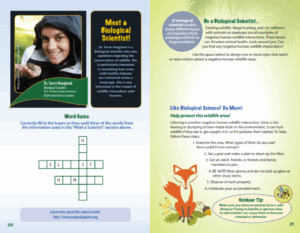
Meet Dr. Serra Hoagland – a biological scientist who asks questions regarding the conservation of wildlife. She is particularly interested…
Meet Dr. Serra Hoagland – a biological scientist who asks questions regarding the conservation of wildlife. She is particularly interested in examining how areas with healthy habitats are connected across...

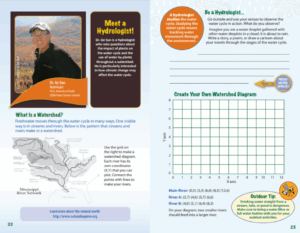
Meet Dr. Ge Sun – a hydrologist who asks questions about the impact of plants on the water cycle and…
Meet Dr. Ge Sun – a hydrologist who asks questions about the impact of plants on the water cycle and the use of water by plants throughout a watershed. He...

NSI: Nature Science Investigator (NSI) is a self-guided activity book for children ages 8-14. The booklet enables each student to…
NSI: Nature Science Investigator (NSI) is a self-guided activity book for children ages 8-14. The booklet enables each student to become the scientist! Eleven Forest Service scientists are highlighted. Students...