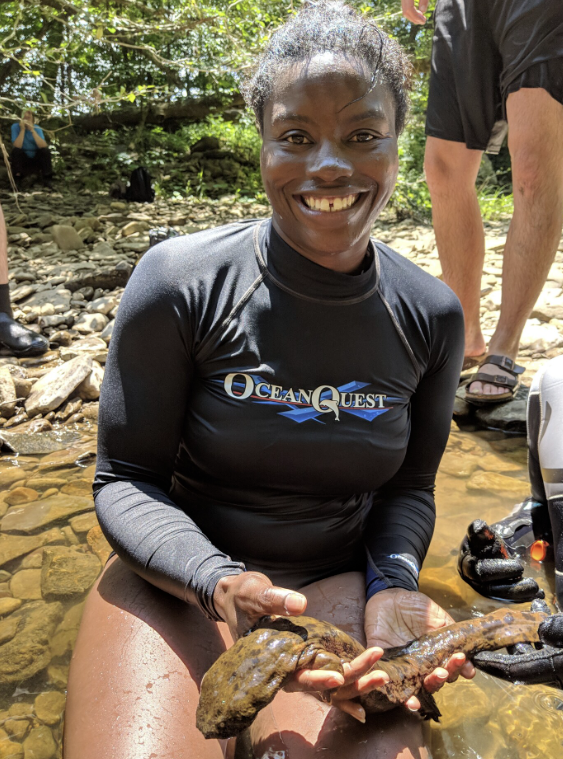
An aquatic ecologist studies the interactions between aquatic animals and their environment and an astacologist studies crayfish. I focus on how the changes humans make in aquatic ecosystems and their surrounding watersheds impact aquatic animals, especially crayfish.
I have to think creatively when trying to answer a scientific question. My ability to think outside the box and pay attention to details enables me to fully understand how small changes affect the environment.
How do dams and man-made lakes impact gene flow of stream crayfish above and below dams? Gene flow is the movement and mating of individuals from one population to another. When crayfish mate with crayfish from another population they pass on genetic material that is important to the survival of the populations.
We use small, oval PIT tags to monitor crayfish movement. PIT tags are inserted into the hard, outer shell of a crayfish. The tags link to antennae used to track crayfish movement throughout their environment.
In Alabama streams, crayfish were not able to move past dams to mate with crayfish on the other side of dams. This fragmented or separated crayfish populations above and below dams. Because the crayfish were separated by dams, they could no longer pass on their genetic information which is important to the survival of crayfish populations. Now we must find ways to connect crayfish above and below dams to prevent the reduction and loss of crayfish populations.
I have always loved the outdoors and spent a lot of time fishing, hunting, and exploring aquatic environments growing up. However, I did not realize I wanted to become a scientist until my second semester of college after taking an animal science course. I was an agricultural economics major and realized I enjoyed my science classes and field experiences more than economics.