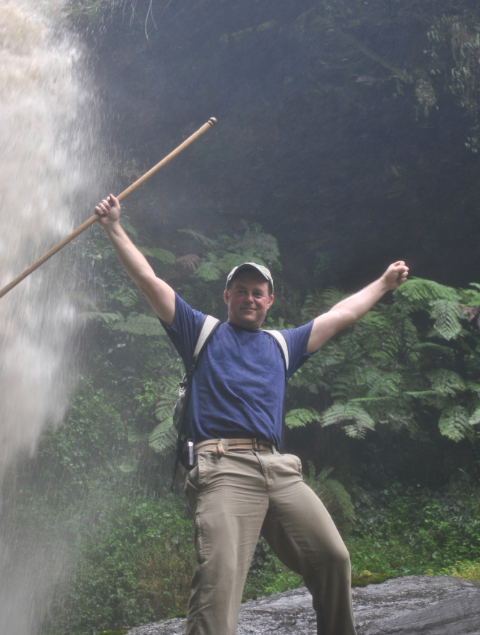
Ecology is a Greek word — “ology” means “to study” and “eco” means house. In this case, the house is the Earth, and I study large parts of our planet, so I am a “landscape ecologist.”
I am really good with puzzles! I can look at really complex issues that don’t seem to fit together, understand each of them, and then bring them together. That is called “integrated science,” and it is super fun because you can see things that no one in the whole world has ever seen before!
What happens if forests receive too much nitrogen because of air pollution, or become warmer due to climate change? What happens if both of these events occur together?
The internet has completely changed how I do research. It used to take a month to find information, then develop and test research ideas. Now, most scientific papers are instantly available. When scientists can quickly learn what other scientists are doing, the rate of scientific progress increases. For me, this means I can better understand ecosystem sustainability.
I found that even small amounts of nitrogen pollution added over a long time can kill a forest. I also found that trees are sort of like computers in that they can store information about how fast they have grown over time, and how much water they have used.
When I was little, my grandma had a set of encyclopedias from the 1800s, and I would go to her house and read one after another. I wanted to spend my life asking and answering questions so we could put them in a book to share with other people.