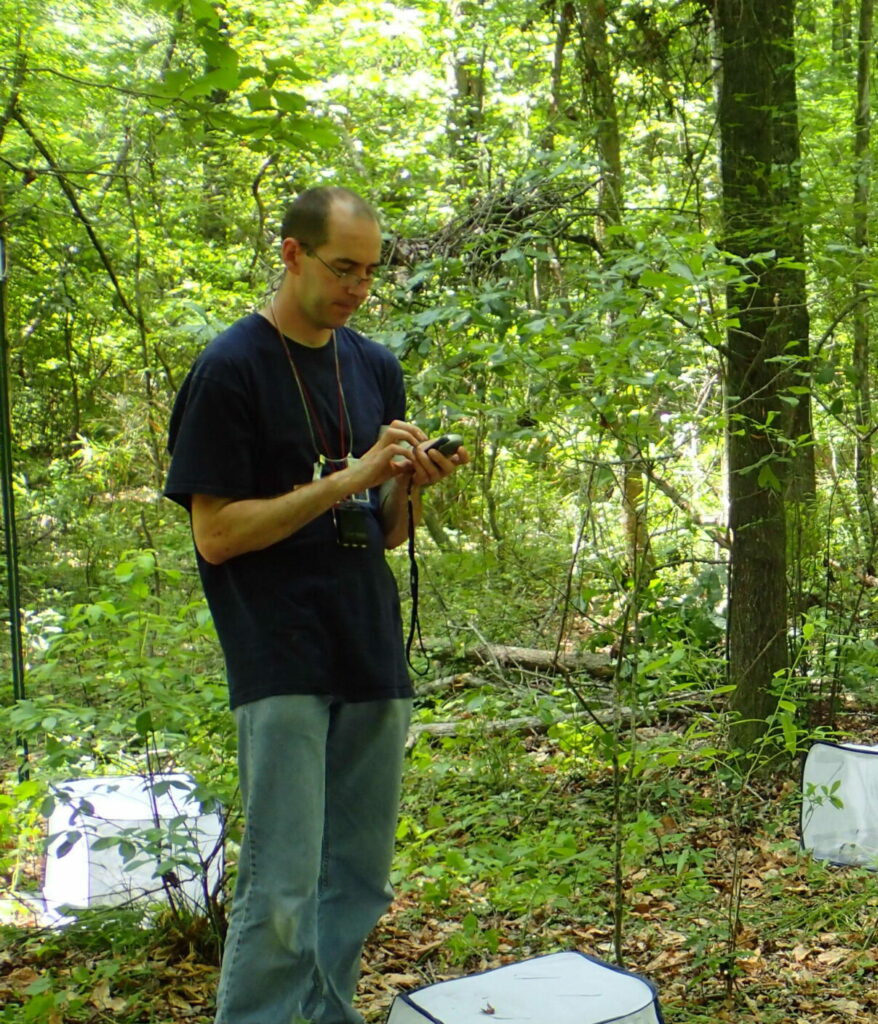
As an entomologist, I study how insects impact forest health, and how insects are affected by forest management activities.
Most of my studies last for several years, and I often have several of them underway at the same time. To be successful, I have learned to be highly organized to avoid getting confused or losing critical information!
How are pollinating insects, like bees and butterflies, impacted by the prescribed fires people use to control plant growth in forests? This is an important question because pollinating insects are needed by many of the plants that humans rely on for food.
As a scientist, I do not always use high-tech or expensive equipment. Colored plastic bowls filled with soapy water are very effective for sampling bee and butterfly communities, for example.
In one study, we unexpectedly captured 18 times more bees in traps placed high above the forest floor compared to traps placed just above the ground. One bee species was 40 times more likely to be found in the higher traps! This was especially exciting because we were not even trying to capture bees in that study.
My interest in the natural world began very early. I think my interest started when my grandpa took me to collect Ordovician fossils (remains of sea creatures that lived almost half a billion years ago). That trip was to limestone cliffs we called “Devil’s Backbone” near my parents’ house in Ohio.