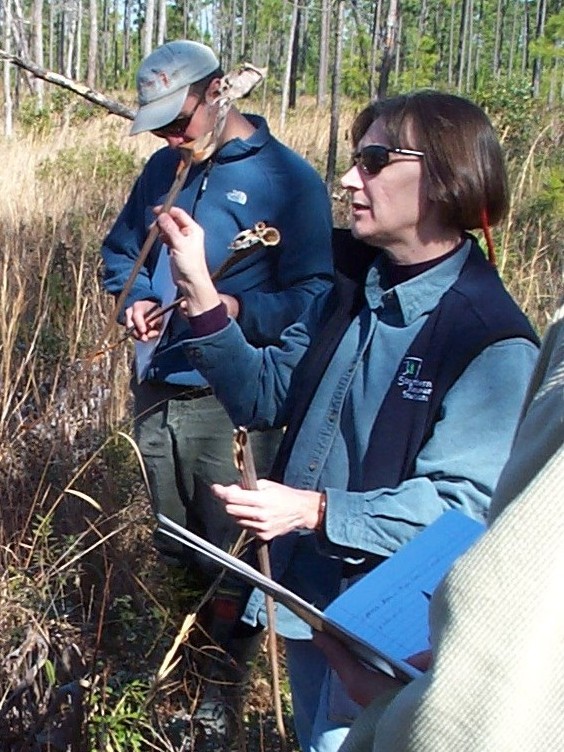
A wetlands ecologist studies land-based ecosystems that often flood or pond with water, such as swamps and marshes. My specialty is wetland plant communities.
It’s essential to be curious and interested in solving problems. I pay attention to detail and make careful observations so that my conclusions are based on logic and evidence. Good writing is important. I also enjoy working in the field, even if it’s wet and muddy!
How do different patterns of flooding affect which plant communities occur in wetlands, and how can we use that knowledge to manage or restore wetlands? One finding is that length of the flooding period affects whether a wetland is forested or herbaceous.
I use basic field equipment such as measuring tapes, compasses, and water-level gauges. In the lab, I need a stereomicroscope for identifying plant species. A computer is essential for analyzing data, making maps, and studying wetland landscapes in a geographic information system (GIS).
It’s hard to choose! In one study, I analyzed a large number of wetlands that were restored by a federal conservation program (Wetlands Reserve Program). I was excited to find that some unusual and creative projects were helping to conserve and restore important floodplain forests in the southeast U.S.
As a child I was fascinated by nature, even if it was just learning about the insects and plants in my backyard. In high school and college, I found that I could study biology in-depth and pursue a career doing field research on natural systems.