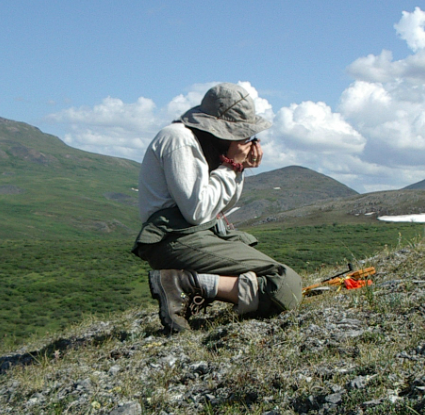
A nonvascular botanist focuses on the identification, biology, and ecology of bryophytes (a group of nonflowering plants that includes mosses) and lichens.
An ability to see details is essential for studying lichens and bryophytes. Being curious about their habitat needs and observing their presence or absence from a site allow us to understand the health of our environment.
We use lichen communities to understand air quality in Forest Service wilderness areas. One of the greatest challenges to analyzing trends has been increased stand-replacing fires. When fire consumes lichens and the trees they live on, we lose the ability to compare conditions between site visits.
We use tools that help us differentiate species, especially books. We also use tools that magnify minute details, like hand lenses for field work and microscopes in the laboratory. In lichenology, we use various chemicals and ultraviolet light to help us correctly identify species.
My most exciting project has been investigating the relationship of older forests and tiny “pin” lichen and fungi. It takes a tremendous amount of patience to locate and identify this group, but they are magical.
I grew up in a landscape dominated by nature, so lichens and bryophytes have always been in my sight. I didn’t realize I would study them as a career until I worked as a seasonal employee conducting surveys.